Image AIBrandingAdvanced90 minSaves 2+ hours

Define Outdoor Lifestyle Brand Mood with Alpine Aesthetics

For outdoor brand founders and creative leads, generate a precise visual mood specification for new lifestyle brands, focusing on muted alpine palettes and weathered textures to establish a cohesive identity.

For outdoor brand founders and creative leads, this prompt defines a comprehensive visual mood for a lifestyle brand. It specifies a muted alpine color palette, condensed sans-serif typography, and weathered textures, then generates three sample compositions and negatives for image generation.

READY-TO-USE PROMPT

Copy Prompt

prompt.txt
Act as a seasoned brand identity specialist with expertise in outdoor lifestyle aesthetics.

Context: I am developing the visual identity for a new outdoor lifestyle brand named {{brand_name}}. The brand aims to convey durability, authenticity, and a connection to natural, rugged environments. We are specifically targeting a visual mood that evokes muted alpine landscapes, uses a refined yet accessible typography style, and incorporates tactile, weathered textures. The core values are {{key_adjectives}}.

Task: Generate a detailed brand mood specification. This specification must articulate the core visual elements that define the brand's aesthetic.

Specifically, your output needs to cover:

1.  **Color Palette:** Propose a primary and secondary color palette, including specific hex codes or descriptive names, suitable for a muted alpine aesthetic. Explain the rationale for each color's inclusion.
2.  **Typography Vibe:** Describe the desired typographic feel, aligning with a condensed sans-serif style. Suggest characteristics like weight, spacing, and overall impression, without naming specific fonts.
3.  **Texture & Materiality:** Detail the types of weathered textures and materials that should be integrated into the brand's visual assets. Think about surfaces, fabrics, and natural elements.
4.  **Sample Compositions (3):** For each of three distinct visual concepts representing the brand's mood, provide a short descriptive prompt (50-70 words each) suitable for an image generation AI. These compositions should clearly integrate the specified palette, typography vibe (implied through overall aesthetic), and textures. Each composition prompt should suggest a specific scene or product application.
5.  **Negative Prompts (3):** For each sample composition, provide a corresponding list of negative prompts to guide image generation away from undesirable aesthetics (e.g., overly vibrant, sterile, futuristic, glossy, cartoonish).

Constraints:

*   Maintain a consistent, sophisticated, and understated tone.
*   Ensure all elements align with the "muted alpine, condensed sans, weathered" theme.
*   Avoid overly bright, saturated, or artificial colors.
*   Focus on natural light and authentic textures.
*   Typography should feel grounded and legible, not overly stylized or decorative.
*   The output must be actionable for a creative team.

Output: Present the information clearly under the headings: "Color Palette," "Typography Vibe," "Texture & Materiality," "Sample Compositions," and "Negative Prompts." Use a markdown list for the negative prompts.

Estimated results

DifficultyAdvanced
Setup time90 min
Time saved2+ hours
Best modelsMidjourney, Flux
Best audienceBranding, Retail

Editor's note

Why this prompt matters

Establishing a distinct visual identity for a new outdoor lifestyle brand presents a common challenge: how to translate abstract values like durability and authenticity into concrete, actionable design directives. Generic mood boards often fall short, leaving creative teams to interpret vague concepts, which can lead to inefficient design cycles and inconsistent visual outputs.

This workflow is designed for outdoor brand founders and creative leads at the crucial initial stages of brand development or during a significant refresh. It addresses the need for a precise visual blueprint, ensuring all stakeholders are aligned on the core aesthetic before any significant design work commences. By generating a detailed specification that articulates color palettes, typography, and textures, it provides a solid foundation for creative exploration.

Reach for this workflow when you need to define a cohesive visual mood that captures specific aesthetic nuances—such as a muted alpine palette or weathered textures—and requires actionable guidance for designers and image generation tools. It streamlines the briefing process, enabling a more focused and efficient path to a strong brand identity.

Anatomy

Prompt engineering breakdown

Role

Act as a seasoned brand identity specialist with expertise in outdoor lifestyle aesthetics.

Context

Developing visual identity for a new outdoor lifestyle brand named {{brand_name}}. Aims to convey durability, authenticity, and a connection to natural, rugged environments. Targeting a visual mood of muted alpine landscapes, refined yet accessible typography, and tactile, weathered textures. Core values are {{key_adjectives}}.

Goal

Generate a detailed brand mood specification covering color palette, typography vibe, texture/materiality, three sample compositions for AI image generation, and corresponding negative prompts.

Constraints

Maintain a consistent, sophisticated, and understated tone. All elements align with 'muted alpine, condensed sans, weathered' theme. Avoid overly bright/saturated/artificial colors. Focus on natural light and authentic textures. Typography grounded and legible. Output actionable.

Output format

Present information clearly under specific headings: 'Color Palette,' 'Typography Vibe,' 'Texture & Materiality,' 'Sample Compositions,' and 'Negative Prompts.' Use markdown lists for negative prompts.

Why this structure works

Role priming establishes the AI's persona as an expert, ensuring informed and appropriate responses. Explicit constraints guide the AI to specific aesthetic boundaries, preventing undesirable outputs. Structured output ensures all required elements are present and organized, making the specification directly usable by a creative team.

Pick your version

Prompt variations

BeginnerWorks with any model

For initial exploration of brand mood concepts, or when less detail is needed to kickstart a visual direction.

prompt.txt
Imagine you are a designer helping a new outdoor brand called {{brand_name}}. We want its look to feel like a calm mountain landscape, with soft colors and a simple, clear font. We also like worn, natural textures. Please describe a visual style for this brand. Tell us about the main colors, what kind of simple text style to use (no specific fonts, just the feeling), and what natural textures would fit. Also, suggest three simple ideas for pictures that show this style, and for each picture, list a few things we *don't* want to see (like very bright colors or shiny objects). The overall feeling should be natural and strong.
ProfessionalBest with midjourney

When a detailed, structured brand mood specification is required, including specific AI image generation prompts and negative prompts for a brand identity project.

prompt.txt
Act as a seasoned brand identity specialist with expertise in outdoor lifestyle aesthetics.

Context: I am developing the visual identity for a new outdoor lifestyle brand named {{brand_name}}. The brand aims to convey durability, authenticity, and a connection to natural, rugged environments. We are specifically targeting a visual mood that evokes muted alpine landscapes, uses a refined yet accessible typography style, and incorporates tactile, weathered textures. The core values are {{key_adjectives}}.

Task: Generate a detailed brand mood specification. This specification must articulate the core visual elements that define the brand's aesthetic.

Specifically, your output needs to cover:

1.  **Color Palette:** Propose a primary and secondary color palette, including specific hex codes or descriptive names, suitable for a muted alpine aesthetic. Explain the rationale for each color's inclusion.
2.  **Typography Vibe:** Describe the desired typographic feel, aligning with a condensed sans-serif style. Suggest characteristics like weight, spacing, and overall impression, without naming specific fonts.
3.  **Texture & Materiality:** Detail the types of weathered textures and materials that should be integrated into the brand's visual assets. Think about surfaces, fabrics, and natural elements.
4.  **Sample Compositions (3):** For each of three distinct visual concepts representing the brand's mood, provide a short descriptive prompt (50-70 words each) suitable for an image generation AI. These compositions should clearly integrate the specified palette, typography vibe (implied through overall aesthetic), and textures. Each composition prompt should suggest a specific scene or product application.
5.  **Negative Prompts (3):** For each sample composition, provide a corresponding list of negative prompts to guide image generation away from undesirable aesthetics (e.g., overly vibrant, sterile, futuristic, glossy, cartoonish).

Constraints:

*   Maintain a consistent, sophisticated, and understated tone.
*   Ensure all elements align with the "muted alpine, condensed sans, weathered" theme.
*   Avoid overly bright, saturated, or artificial colors.
*   Focus on natural light and authentic textures.
*   Typography should feel grounded and legible, not overly stylized or decorative.
*   The output must be actionable for a creative team.

Output: Present the information clearly under the headings: "Color Palette," "Typography Vibe," "Texture & Materiality," "Sample Compositions," and "Negative Prompts." Use a markdown list for the negative prompts.
Short VersionWorks with any model

When a quick, high-level overview of an outdoor brand's visual mood is needed, without deep technical specifications.

prompt.txt
As a brand designer, outline a visual mood for the outdoor lifestyle brand {{brand_name}}. Focus on a muted alpine palette, a grounded condensed sans-serif typography vibe, and weathered, authentic textures. Provide a primary color scheme, typographic characteristics, and a few key textures. Additionally, generate one short AI image prompt (40-60 words) integrating these elements, and a list of 3-5 negative prompts to avoid overly vibrant or artificial aesthetics. The goal is a natural, durable, and understated visual identity.
EnterpriseBest with flux

For large organizations requiring comprehensive brand guidelines, ensuring alignment with corporate standards and stakeholder feedback processes.

prompt.txt
As a lead brand identity architect, develop a comprehensive visual mood specification for the new outdoor lifestyle brand, {{brand_name}}. This specification must adhere to established brand guideline frameworks and facilitate multi-stakeholder review. The aesthetic direction mandates a muted alpine color palette, a highly legible condensed sans-serif typographic system, and integrated weathered natural textures to communicate durability and authenticity.

Deliverables include:
1.  A primary and secondary color palette with precise specifications (e.g., CMYK, RGB, Hex), accompanied by strategic justification for brand coherence and digital/print application.
2.  A detailed typography guide articulating weight, optical balance, and usage principles for a condensed sans-serif, ensuring readability and brand consistency across all touchpoints.
3.  A material and texture specification, detailing appropriate weathered finishes and natural elements, with consideration for scalability across diverse media and product lines.
4.  Three highly detailed AI image generation prompts (60-80 words each), explicitly integrating all specified visual elements. Each prompt should include usage context for brand asset creation, emphasizing adherence to brand safety and IP considerations.
5.  Corresponding sets of negative prompts, rigorously crafted to mitigate brand misrepresentation and avoid visuals that conflict with ethical sourcing or sustainability messaging, such as 'artificial,' 'excessively commercial,' or 'unnatural sheen.'

All outputs must support a system-wide approach to brand asset creation, ensuring consistent application and minimizing deviation from the core identity, critical for legal and marketing compliance. Core brand values are {{key_adjectives}}.

What you'll get

Expected output

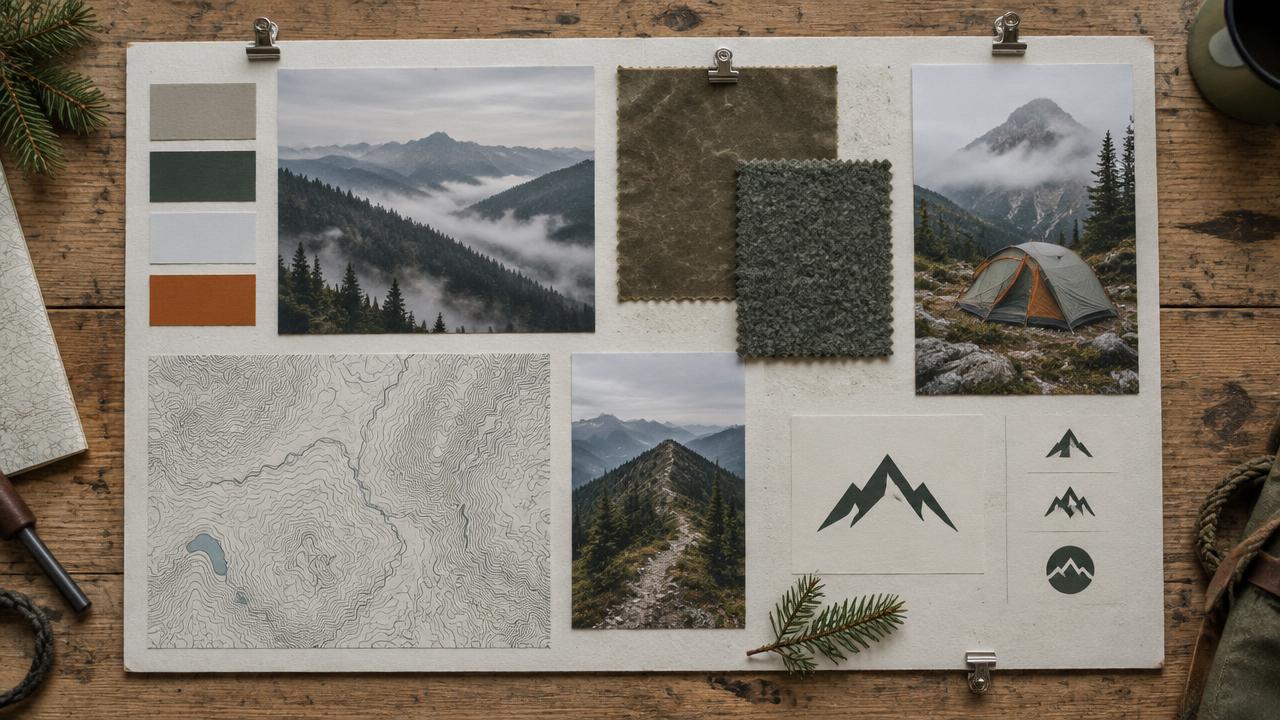
Brand Name: Terra Firma Key Adjectives: grounded, enduring, authentic

Color Palette:

  • Primary Palette:

* Alpine Granite (#4A4E54): Deep, muted grey, like weathered rock faces. Conveys stability and understated strength. * Forest Moss (#5F7C6F): Subdued, earthy green, reflecting damp forest floors. Represents connection to nature and growth. * Cloudy Sky (#B3C1C7): Soft, desaturated blue-grey, evoking overcast mountain skies. Adds a sense of calm and vastness.

  • Secondary Palette:

* Sun-Kissed Ochre (#C7A87E): Warm, desaturated yellow-brown, like dried grass. Offers a subtle hint of warmth without being vibrant. * Twilight Berry (#7D6A74): Deep, muted berry tone, suggesting hardy mountain berries. Provides organic depth and subtle contrast.

Typography Vibe: The typography should feel grounded and legible, reflecting durability and understated confidence. We aim for a condensed sans-serif with clear, open counters, ensuring readability. The weight should lean towards medium to bold, providing presence without being overly aggressive. Spacing should be slightly tightened for efficiency and a modern, disciplined feel, but never hindering legibility. The overall impression should be one of functional elegance, reflecting a brand that is serious about its craft but approachable.

Texture & Materiality: The brand's visual assets should integrate textures that speak to natural wear, resilience, and tactile experience. Think about the coarse grain of untreated timber, the subtle irregularities of hand-stitched canvas or waxed cotton, and the subtle imperfections of aged leather. Other elements include the stratified layers of natural rock, the fine dust on a well-worn trail, and the organic patterns found in pressed leaves. These textures should provide a subtle, authentic backdrop, reinforcing the brand's connection to rugged outdoor environments and durable goods.

Sample Compositions:

  1. A close-up shot of a well-used hiking backpack, crafted from waxed canvas and aged leather, resting on a flat, weathered granite slab. The light is soft and diffused, hinting at an overcast alpine morning. A subtle watermark of the brand name "Terra Firma" appears in a condensed sans-serif font, slightly debossed into a leather strap. The color palette is dominated by muted greys, earthy greens, and subtle ochre tones.

* Negative Prompts: overly saturated, glossy, plastic, futuristic, sterile, vibrant, cartoonish, smooth, reflective, new, pristine.

  1. A wide shot of a solitary figure wearing durable outdoor apparel, standing at the edge of a mountain lake, surrounded by muted alpine flora and weathered rock formations. The light is natural and soft, casting long, subtle shadows. The brand's wordmark "Terra Firma" is subtly integrated as a small, embroidered tag on the figure's jacket sleeve, in a condensed sans-serif. The overall scene emphasizes quiet strength and connection to enduring nature.

* Negative Prompts: bright sun, clear sky, urban, tropical, desert, neon, glossy, artificial light, overly styled, fashion magazine, luxury, vibrant colors.

  1. A flat lay composition featuring a collection of small, essential outdoor gear items: a compact multi-tool, a well-worn map with subtle creases, and a hand-carved wooden compass. These items are arranged on a textured surface resembling rough, unbleached linen or a fine-grain wooden table. A subtle "Terra Firma" wordmark is debossed into the wooden compass. The lighting is even and natural, highlighting the tactile qualities and muted color tones.

* Negative Prompts: sterile, clean room, plastic, shiny, modern tech, digital, vibrant, chaotic, cluttered, glossy, cartoonish, overly bright.
Under the hood

Why this prompt works

The prompt employs several effective techniques to guide the AI toward precise results. Role priming establishes the AI's persona as a "seasoned brand identity specialist," setting an expectation for expert-level output and a sophisticated tone. This immediately directs the model to draw on a specific knowledge domain.

The explicit request for a structured output, broken down into specific headings like "Color Palette," "Typography Vibe," and "Sample Compositions," forces the AI to organize its response logically and comprehensively. This prevents generic, free-form answers and ensures all critical brand elements are addressed. Within each section, the detailed instructions and examples (e.g., "include specific hex codes or descriptive names," "without naming specific fonts") act as implicit scaffolding, guiding the AI on the *type* and *granularity* of information required.

Finally, the explicit constraints section ("Maintain a consistent, sophisticated, and understated tone," "Avoid overly bright, saturated, or artificial colors") acts as a critical filter, steering the AI away from undesirable aesthetics. This combination of directed persona, clear structure, and specific limitations ensures the generated brand mood specification is not only comprehensive but also highly aligned with the specific "muted alpine, condensed sans, weathered" aesthetic, producing a far more actionable and coherent output than a simple, open-ended request.

Model fit

Best AI models for this prompt

Midjourney

Midjourney excels at generating highly aesthetic and stylized imagery, making it ideal for conceptual brand mood boards. Its ability to interpret nuanced artistic directions and blend abstract ideas with concrete visual elements ensures a sophisticated output. While capable for artistic interpretation, achieving precise textual integration within images requires careful prompting. See the full Midjourney hub for deeper guidance.

Flux

Flux is well-suited for this task due to its strength in producing detailed, realistic textures and natural lighting conditions. It handles specific material descriptions effectively, which is crucial for the "weathered textures" requirement. Users may find it requires more iteration to achieve a highly stylized, abstract brand feel compared to other models. See the full Flux hub for deeper guidance.

When to use

  • When establishing the initial visual direction for an outdoor lifestyle brand.
  • For articulating a cohesive aesthetic vision to stakeholders or a creative team.
  • To quickly generate inspiration for mood boards and early design concepts.
  • When needing specific descriptive prompts for AI image generation based on a defined mood.
  • Before committing to detailed design work, to validate a "muted alpine" aesthetic.

When not to use

  • If you require a complete brand style guide with logo specifications and usage rules.
  • When you need exact font files or detailed print production guidelines.
  • For generating final, production-ready marketing assets directly from the AI.
  • If your brand's aesthetic is vibrant, futuristic, or explicitly non-natural.
  • When seeking specific product designs rather than overall mood compositions.

Get more from it

Pro tips

  • 1

    Experiment with diverse `key_adjectives` to prevent a generic brand voice. Subtle shifts in descriptors yield distinct aesthetic nuances.

  • 2

    Always review the generated negative prompts. Tailoring them to specific undesirable outputs significantly refines subsequent image generation.

  • 3

    Test the composition prompts in your chosen AI image model. Model variations require prompt adjustments for optimal visual alignment.

  • 4

    Treat the initial output as a starting point. Iterate on color names, texture descriptions, and composition ideas for a closer match to your vision.

  • 5

    Incorporate real-world visual references alongside the AI output. This grounds the abstract mood in tangible design examples, preventing conceptual drift.

Don't ship this

Common mistakes

  • Providing vague or overly broad `key_adjectives` like "good" or "modern," which lack specific visual cues.

    Fix — Use specific, evocative terms such as "rugged," "enduring," "minimalist," or "heritage" to guide the AI precisely.

  • Expecting the AI to name specific fonts for the typography vibe, which is outside its scope for this prompt.

    Fix — The prompt describes characteristics. Use these descriptions to inform your font selection process from a library of actual typefaces.

  • Overlooking the importance of the negative prompts provided for the image generation phase, leading to off-brand visuals.

    Fix — Carefully apply the negative prompts. They are crucial for filtering out undesired visual elements and maintaining the defined aesthetic.

  • Directly using the generated composition prompts without understanding your specific AI model's syntax and nuances.

    Fix — Adapt the composition prompts to fit the specific input requirements and preferred phrasing conventions of your chosen image generation AI.

  • Not iterating on the initial output if it's not a perfect match for your vision, accepting the first draft.

    Fix — Refine your `key_adjectives` and contextual details in the prompt. Small adjustments often lead to more aligned and useful results.

People also ask

Frequently asked questions

Q.Can this prompt be adapted for a non-outdoor brand, like a tech startup?

While possible, this prompt is highly optimized for "muted alpine, condensed sans, weathered" aesthetics. Modifying it for a radically different style would require substantial revision of the core descriptive elements and constraints.

Q.How specific should my `brand_name` and `key_adjectives` inputs be for best results?

Be as specific as possible. A unique brand name helps the AI contextualize, and detailed adjectives like "resilient, artisanal, understated" yield much more focused and useful outputs than general terms.

Q.Does this prompt generate actual images, or just text descriptions for brand mood?

This prompt generates detailed text descriptions for a brand mood specification. It includes specific prompts and negative prompts that you then feed into an AI image generator like Midjourney or Flux to create visuals.

Q.What if I don't like the color palette or texture suggestions in the initial output?

The output is a starting point for discussion. Review the rationale provided, then refine your key_adjectives or add specific color preferences to the input for a second iteration. Manual adjustment is also an option.

Q.Is this a replacement for a professional brand strategist or designer's expertise?

No. This prompt acts as a specialized assistant, accelerating the initial mood definition phase. It provides a structured output for designers to build upon, not a complete brand identity solution or strategic framework.

Q.How long should I expect the output to be, in terms of content volume?

The output will be comprehensive, covering all requested sections: palette, typography vibe, textures, three sample compositions, and three sets of negative prompts. Expect several paragraphs of descriptive text and lists, suitable for direct use by a design team.

Version 1.0Last reviewed July 20, 2026
Reviewed by PromptInFlow Editorial Team