Image AIBrandingAdvanced90 minSaves 2+ hours

Coastal Boutique Hotel: Brand Identity Mood Board Specification

Brand designers defining a coastal boutique hotel identity. Generate initial visual direction: warm neutrals, elegant serifs, and natural textures for an inviting aesthetic.

This prompt guides hospitality brand designers in generating core visual direction for a coastal boutique hotel. It outlines specific aesthetic elements like warm neutral color palettes, elegant serif typography, and natural material textures to define a sophisticated, inviting brand identity, streamlining the initial concept phase.

READY-TO-USE PROMPT

Copy Prompt

prompt.txt
Role: Expert Brand Identity Designer, specializing in hospitality.

Context: You are developing the initial visual identity direction for a new boutique hotel named "{{hotel_name}}" located in a coastal region, described as `{{coastal_region_descriptor}}`. The brand seeks a sophisticated, inviting aesthetic, blending natural elements with understated elegance. The target audience appreciates refined simplicity and a connection to nature.

Task: Generate a comprehensive brand mood specification that serves as a foundational brief for visual asset creation. This specification must detail the core visual elements and provide concrete examples.

Constraints:
*   Focus on a warm neutral color palette with subtle oceanic accents.
*   Typography should lean towards elegant serifs for headlines and clean sans-serifs for body text, conveying sophistication and readability.
*   Textures should evoke natural materials: bleached wood, linen, worn stone, subtle sand, and organic fibers.
*   The overall feeling should be serene, luxurious, and connected to its coastal environment without being overtly "beachy" or cliché.
*   The output must include specific color hex codes (approximations if necessary), suggested type styles (e.g., "Classic Didone," "Modern Garamond"), and detailed descriptions of material textures.
*   Include a list of negative prompts to guide image generation, preventing common pitfalls or undesired aesthetics.
*   The final output should provide three distinct sample compositions for visual reference, each accompanied by its positive and negative prompts suitable for an image AI.

Output:
Your output must be structured as follows:

1.  **Brand Mood Specification: {{hotel_name}}**
    *   **Core Aesthetic Summary:** [1-2 sentences]
    *   **Color Palette:**
        *   Primary Neutrals: [Hex Code] (Description), [Hex Code] (Description)
        *   Accent Colors: [Hex Code] (Description), [Hex Code] (Description)
    *   **Typography Vibe:**
        *   Headline Type Style: [e.g., "Elegant Serif," "Refined Didone"] (Description of character and feeling)
        *   Body Type Style: [e.g., "Clean Sans-Serif," "Modern Humanist"] (Description of character and feeling)
    *   **Material Textures:**
        *   Primary: [Texture 1] (Description of visual and tactile qualities)
        *   Secondary: [Texture 2] (Description of visual and tactile qualities)
        *   Accent: [Texture 3] (Description of visual and tactile qualities)
    *   **Overall Visual Language:** [2-3 sentences describing the coherence and desired emotional response]

2.  **Image Generation Guidance:**
    *   **General Negative Prompts:**
        *   [Negative Prompt 1]
        *   [Negative Prompt 2]
        *   [Negative Prompt 3]
        *   [Negative Prompt 4]
        *   [Negative Prompt 5]

3.  **Sample Visual Compositions (3 examples):**
    *   **Composition 1: Lobby Entryway Detail**
        *   **Description:** [2-3 sentences describing the scene, mood, and key elements to be depicted.]
        *   **Positive Prompt:** [Detailed prompt for image AI, incorporating palette, type vibe (subtly, if applicable), and textures.]
        *   **Negative Prompt:** [Specific negatives for this composition, building on general negatives.]
    *   **Composition 2: Guest Room Interior View**
        *   **Description:** [2-3 sentences describing the scene, mood, and key elements to be depicted.]
        *   **Positive Prompt:** [Detailed prompt for image AI.]
        *   **Negative Prompt:** [Specific negatives for this composition.]
    *   **Composition 3: Brand Collateral Close-up (e.g., menu cover or stationery)**
        *   **Description:** [2-3 sentences describing the scene, mood, and key elements to be depicted.]
        *   **Positive Prompt:** [Detailed prompt for image AI.]
        *   **Negative Prompt:** [Specific negatives for this composition.]

Estimated results

DifficultyAdvanced
Setup time90 min
Time saved2+ hours
Best modelsMidjourney, Flux
Best audienceHospitality, Branding

Editor's note

Why this prompt matters

The process of translating an abstract brand vision into a concrete visual identity often involves many subjective steps. For hospitality brand designers, establishing a coherent aesthetic for a new boutique hotel requires meticulous attention to detail, from color psychology to material tactility. This workflow addresses the challenge of moving from a conceptual brief to an actionable visual direction, ensuring all key elements are considered and documented systematically.

It is designed for brand designers, creative directors, or marketing professionals tasked with defining the foundational visual language for a new hospitality venture. By providing a structured framework, this approach helps articulate the desired mood, palette, typography, and textures before any visual assets are commissioned or created. Use this workflow at the project's inception, when the core brand essence needs to be solidified into a tangible visual brief, especially when preparing for AI-driven visual exploration. It streamlines the initial phase of visual identity development, providing a clear roadmap for subsequent design work.

Anatomy

Prompt engineering breakdown

Role

Expert Brand Identity Designer, specializing in hospitality.

Context

Developing the initial visual identity direction for a new boutique hotel in a coastal region. The brand seeks a sophisticated, inviting aesthetic, blending natural elements with understated elegance. The target audience appreciates refined simplicity and a connection to nature.

Goal

Generate a comprehensive brand mood specification that serves as a foundational brief for visual asset creation. This specification must detail core visual elements and provide concrete examples, including positive and negative prompts for image AI.

Constraints

Focus on a warm neutral color palette with subtle oceanic accents. Typography should lean towards elegant serifs for headlines and clean sans-serifs for body text. Textures should evoke natural materials (bleached wood, linen, worn stone, subtle sand, organic fibers). The overall feeling should be serene, luxurious, and connected to its coastal environment without being overtly 'beachy' or cliché. Output must include specific color hex codes, suggested type styles, detailed texture descriptions, and a list of negative prompts. Provide three distinct sample compositions for visual reference, each with positive and negative prompts.

Output format

A structured document beginning with a 'Brand Mood Specification' (including core aesthetic, color palette, typography, material textures, and overall visual language), followed by 'Image Generation Guidance' (general negative prompts), and then 'Sample Visual Compositions' (three examples, each with a description, positive prompt, and negative prompt).

Why this structure works

The prompt begins with strong role priming, establishing the AI's persona as an expert, which guides its interpretive abilities. Explicit constraints on color, typography, textures, and overall tone prevent generic outputs and ensure alignment with the brand's specific needs. Finally, the highly structured output format guarantees a consistent, easy-to-digest brief, complete with actionable image generation prompts, making it immediately useful for designers.

Pick your version

Prompt variations

BeginnerWorks with any model

For quick initial ideas or when the user needs a basic creative direction without deep technical details. Simplifies the input requirements.

prompt.txt
As a Brand Identity Designer, create a visual mood board concept for a new boutique hotel named "{{hotel_name}}". It's located by the coast and needs a sophisticated, inviting feel. Focus on a warm, natural aesthetic. Provide:

1.  **Color Palette:** Suggest 3-4 main colors (e.g., light beige, soft blue, warm grey) with short descriptions.
2.  **Font Vibe:** Describe the feeling for headlines and body text (e.g., elegant, modern, clean).
3.  **Textures:** List 2-3 natural materials (e.g., linen, wood, stone) and how they feel.
4.  **Overall Mood:** A short paragraph describing the desired atmosphere.
5.  **Image Ideas:** Give 2-3 simple descriptions for images that fit this mood, like "a serene lobby with natural light" or "a close-up of textured linen fabric."

Keep the language simple and direct. The overall vibe should be understated elegance with a connection to nature, not overtly "beachy." The client wants a refined look, described by words like {{vibe_words}}.
ProfessionalBest with midjourney

When a detailed, actionable brand identity brief is required for a sophisticated hospitality project, aligning with the main prompt's intent.

prompt.txt
Act as an expert brand identity designer specializing in hospitality. Develop a comprehensive brand mood specification for `{{hotel_name}}`, a new boutique hotel located in a `{{coastal_region_descriptor}}`. The objective is to establish a sophisticated, inviting aesthetic, blending natural elements with understated elegance. Focus on a warm neutral color palette with subtle oceanic accents. Typography should feature elegant serifs for headlines and clean sans-serifs for body text, conveying sophistication and readability. Textures should evoke natural materials like bleached wood, linen, and worn stone. The overall feeling must be serene and luxurious, connected to its coastal environment without being overtly 'beachy' or cliché. Provide specific color hex codes, suggested type styles, detailed texture descriptions, negative prompts, and three distinct sample compositions with positive and negative prompts for image AI generation.
Short VersionBest with flux

For rapid brainstorming sessions or when only a high-level creative direction is needed without detailed execution prompts.

prompt.txt
As a brand designer, generate a concise visual mood brief for the new "{{hotel_name}}" coastal boutique hotel. The aesthetic should be sophisticated and inviting, blending natural elements with understated elegance. Focus on a warm neutral color palette with subtle oceanic hints, elegant serif typography for headlines, and clean sans-serifs for body text. Textures should evoke natural materials like bleached wood, linen, and worn stone. The overall feeling should be serene, luxurious, and connected to its coastal environment without being overtly "beachy" or cliché. Provide specific direction for {{key_aesthetic_words}}.
EnterpriseBest with midjourney

For large-scale branding projects involving multiple stakeholders, requiring explicit consideration of brand guidelines, legal aspects, and consistency across diverse applications.

prompt.txt
Role: Lead Brand Identity Strategist for hospitality sector.

Context: Develop a foundational visual brand identity brief for the new '{{hotel_name}}' boutique hotel, situated in a `{{coastal_region_descriptor}}`. The objective is to establish a sophisticated, inviting aesthetic that integrates natural elements with refined elegance, appealing to a discerning clientele that values understated luxury and connection to nature. This brief will serve as the primary directive for all subsequent visual asset development and vendor engagement.

Task: Generate a comprehensive brand mood specification that aligns with potential future brand guidelines and ensures consistency across all touchpoints. This specification must detail core visual elements, provide concrete examples, and include guidelines for image AI generation, mindful of brand compliance and intellectual property.

Constraints:
*   Adhere strictly to a warm neutral color palette, incorporating subtle oceanic accents that complement the existing brand vision summary: `{{existing_brand_guidelines_summary}}`.
*   Typography selection must balance elegant serifs for headlines with highly legible sans-serifs for body text, maintaining a sophisticated yet approachable character.
*   Material textures must exclusively reference natural, tactile elements: bleached wood, premium linen, aged stone, fine sand, and organic fibers, avoiding synthetic or overly polished appearances.
*   The brand's essence must convey serenity, luxury, and a deep connection to its coastal setting without resorting to generic or clichéd 'beach' iconography. Maintain a distinct, premium identity.
*   Output must include precise color hex codes (with CMYK/RGB approximations for print/digital consistency), specific font family recommendations (or type styles with rationale), and detailed descriptions of material qualities for procurement.
*   Include a robust set of general and context-specific negative prompts to prevent brand dilution, ensure quality control, and avoid common visual pitfalls or misinterpretations of the brand's sophisticated tone.
*   Provide three distinct, high-level visual composition concepts (e.g., lobby, guest room, collateral) that illustrate the brand's application. Each concept must be accompanied by detailed positive and negative prompts suitable for advanced image AI, designed to guide external creative teams and maintain brand integrity. Ensure all generated content is free from third-party intellectual property infringement and is easily adaptable for brand book inclusion.

What you'll get

Expected output

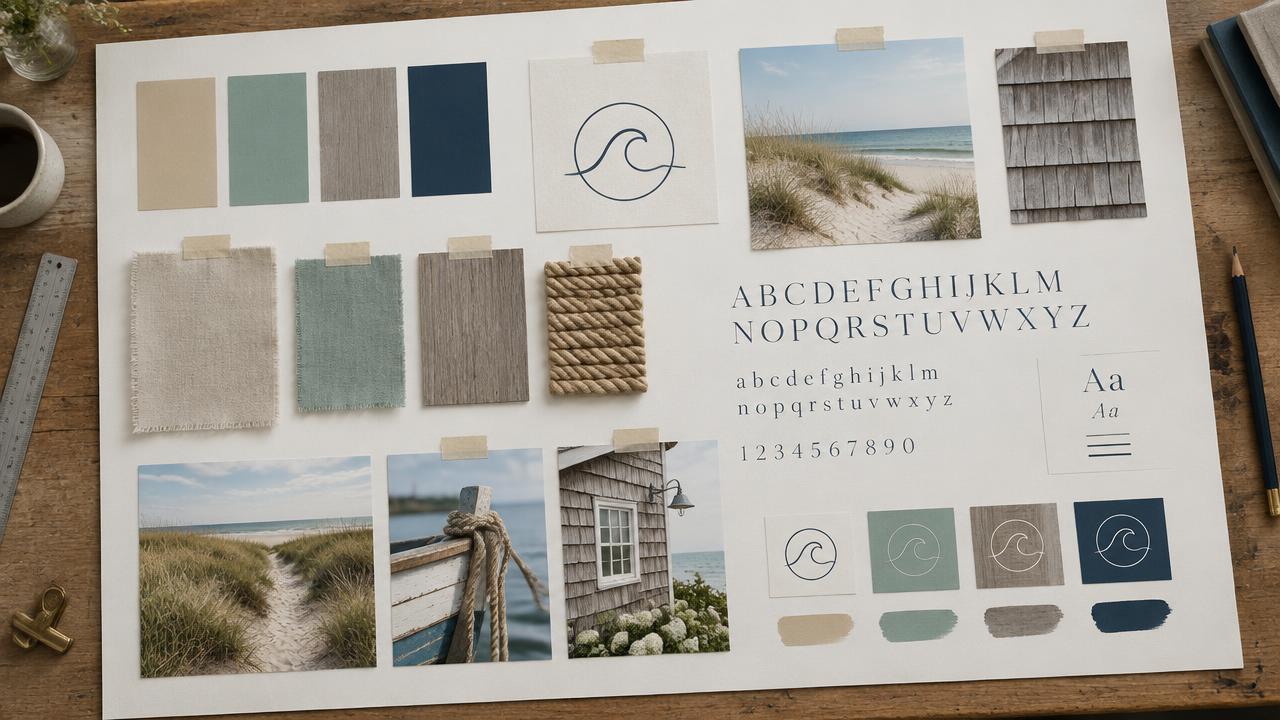
  1. Brand Mood Specification: The Azure Retreat

* Core Aesthetic Summary: The Azure Retreat embodies serene luxury inspired by the Northern California coast, blending understated elegance with organic warmth and a profound connection to its natural environment. * Color Palette: * Primary Neutrals: #F5F5DC (Creamy Linen - a soft, inviting off-white), #E0DED7 (Driftwood Gray - a muted, warm gray with subtle beige undertones) * Accent Colors: #6B7B8E (Coastal Fog - a deep, desaturated blue-gray), #B5A79E (Weathered Stone - a warm, earthy taupe) * Typography Vibe: * Headline Type Style: Elegant Serif (Refined Didone - characterized by high contrast, thin serifs, and classic proportions, conveying sophistication and timelessness) * Body Type Style: Clean Sans-Serif (Modern Humanist - highly legible, open letterforms with a warm, approachable feel, ensuring readability for all content) * Material Textures: * Primary: Bleached Oak (Smooth, light-toned wood grain with subtle natural imperfections, evoking warmth and minimalist coastal design) * Secondary: Raw Linen (Soft, tactile fabric with a visible, organic weave, suggesting comfort and natural elegance) * Accent: Polished Travertine (Subtly porous stone with natural striations and a refined finish, adding an element of grounded luxury) * Overall Visual Language: The visual language for The Azure Retreat is one of quiet sophistication and organic harmony. It seeks to evoke a sense of calm and considered luxury, where every element feels natural and intentional, reflecting the serene beauty and rugged elegance of its coastal setting.

  1. Image Generation Guidance:

* General Negative Prompts: * cartoonish, cartoon, illustration, drawing, painting, graphic novel, anime, low-res, pixelated * bright colors, primary colors, neon, vibrant, garish, artificial, plastic * cluttered, messy, disorganized, chaotic, busy patterns * tropical, palm trees, seashells, overtly 'beachy' motifs, kitsch, cliché coastal * futuristic, industrial, stark white, cold lighting, sharp angles

  1. Sample Visual Compositions (3 examples):

* Composition 1: Lobby Entryway Detail * Description: A close-up view focusing on a minimalist console table in a hotel lobby entryway. The table is crafted from bleached oak, featuring a single, organically shaped ceramic vase in a soft white, holding a dried, sculptural branch. Subtle natural light filters in from the side, highlighting the textures. * Positive Prompt: Interior detail of a boutique hotel lobby, minimalist console table made of bleached oak, ceramic vase in creamy linen, dried sculptural branch, warm natural light, soft shadows, polished travertine floor, elegant, serene, sophisticated, organic textures, #F5F5DC, #E0DED7. * Negative Prompt: cluttered, bright flowers, artificial plants, modern art, harsh lighting, chrome, glossy, overly dark, tropical plants. * Composition 2: Guest Room Interior View * Description: A wide shot of a guest room corner, featuring a cozy reading nook. A low-slung armchair upholstered in raw linen sits beside a window with sheer linen curtains gently billowing. A small, round side table of weathered stone holds a single elegant serif book cover, partially obscured. The mood is tranquil and inviting. * Positive Prompt: Boutique hotel guest room, tranquil reading nook, armchair upholstered in raw linen, sheer linen curtains, soft diffused light, weathered stone side table, elegant serif book cover, serene, comfortable, natural materials, organic, inviting, #B5A79E, #6B7B8E. * Negative Prompt: cluttered, modern art, bright colors, patterned wallpaper, heavy curtains, plastic, chrome, overtly contemporary, messy bed. * Composition 3: Brand Collateral Close-up (e.g., menu cover or stationery) * Description: A close-up flat lay of a menu cover for the hotel restaurant. The cover is made from thick, textured paper in a soft driftwood gray, with the hotel name debossed in an elegant serif typeface. A small, dried sprig of local flora rests beside it on a bleached oak surface. The lighting is soft and even. * Positive Prompt: Flat lay, boutique hotel menu cover, thick textured paper in driftwood gray, debossed hotel name in elegant serif typeface, subtle organic texture, dried sprig of local flora, bleached oak surface, soft even lighting, sophisticated, refined, tactile, #E0DED7, #F5F5DC. * Negative Prompt: glossy, digital screen, bright colors, sans-serif, messy, wrinkled paper, plastic, modern graphics, harsh shadows, crumpled, handwritten.
Under the hood

Why this prompt works

The prompt employs several intentional design choices to yield a comprehensive and actionable brand mood specification. Role priming establishes the model as an "Expert Brand Identity Designer specializing in hospitality," ensuring the output reflects industry-specific knowledge and a professional perspective. This immediately elevates the quality beyond generic responses.

The inclusion of explicit constraints for color, typography, and textures guides the model's creative output, preventing off-brief interpretations and focusing on the desired "warm neutral, elegant serif, natural-material" aesthetic. This structure acts as a guardrail, ensuring consistency with the project's core requirements. Furthermore, the demand for a structured output, broken down into specific sections like Color Palette, Typography Vibe, and Material Textures, forces the model to organize its thoughts logically and provide all necessary details, such as hex codes and type style descriptions. This is critical for creating a usable brief.

Finally, the instruction to generate general and specific negative prompts for image AI is a practical application of advanced prompting techniques. This not only defines what *to include* but also what *to avoid*, directly translating the brand vision into actionable parameters for visual asset creation. This integrated approach, moving from high-level concept to granular detail, significantly improves the utility and precision of the generated output compared to a broad, unstructured request.

Model fit

Best AI models for this prompt

Midjourney

Midjourney excels at translating conceptual briefs into evocative, high-fidelity imagery, making it suitable for mood board generation. Its strength lies in interpreting descriptive language for aesthetics, lighting, and textures, which is crucial for brand identity work. However, achieving precise control over specific hex codes or exact font pairings can be challenging, requiring iteration. See the full Midjourney hub for deeper guidance.

Flux

Flux offers a balance of creative interpretation and adherence to specific instructions, which can be beneficial for refining brand visual concepts. It handles detailed scene descriptions well and can generate compelling compositions that reflect a desired mood. While good with stylistic consistency, it may require careful prompt engineering to ensure the precise blend of elegance and naturalism without veering into generic styles. See the full Flux hub for deeper guidance.

When to use

  • When needing a structured visual brief for a new hospitality brand's identity.
  • When aligning stakeholders on a brand's aesthetic before visual asset creation.
  • When translating abstract brand concepts into concrete visual elements (colors, type, textures).
  • When preparing detailed prompts for image AI tools to generate mood board visuals.
  • When a client requires a detailed breakdown of a brand's visual language for review.

When not to use

  • When the brand identity is already fully established and visual assets are in production.
  • When the project scope is limited to minor visual tweaks, not a full identity direction.
  • For brands outside the hospitality sector, as the framing is specific.
  • When a simple, unstructured mood board without detailed specification is sufficient.

Get more from it

Pro tips

  • 1

    Review the initial output's color hex codes and type styles; AI models often approximate. Adjust these to exact specifications before client presentation to prevent inconsistency.

  • 2

    Test the generated image prompts in your chosen AI (Midjourney, Flux) immediately. This verifies the prompt's effectiveness and catches any misinterpretations early.

  • 3

    Provide explicit, contrasting descriptions for accent colors to ensure they stand out appropriately. Vague descriptions can lead to subtle shifts that dilute the palette.

  • 4

    Specify the desired *feeling* of the typography (e.g., "authoritative elegance") beyond just its style. This prevents generic font suggestions and aligns with brand values.

  • 5

    Iterate on negative prompts for image generation. Refine them based on initial AI outputs to eliminate recurring undesirable elements, saving revision time.

  • 6

    Ensure the `coastal_region_descriptor` is rich and evocative, like "rugged Pacific northwest" or "serene Mediterranean," to guide the aesthetic precisely.

Don't ship this

Common mistakes

  • Providing overly generic `coastal_region_descriptor` inputs like "beach" or "ocean."

    Fix — Use specific, descriptive phrases such as "windswept Atlantic dunes" or "tropical Caribbean reef" to guide the AI's aesthetic interpretation.

  • Not explicitly defining the *relationship* between primary and accent colors in the prompt.

    Fix — Describe how accents should complement or contrast, for example, "subtle pops of coral against neutrals," to ensure palette harmony.

  • Using vague terms for textures, resulting in uninspired visual suggestions from the AI.

    Fix — Specify tactile and visual qualities, like "heavily textured, sun-bleached driftwood" or "smooth, cool river stone," for better AI interpretation.

  • Expecting the generated hex codes to be perfectly accurate and ready for design implementation.

    Fix — Treat hex codes as conceptual starting points. Verify and adjust them in a design program for precise brand adherence before use.

  • Overlooking the need for a balanced and comprehensive "Overall Visual Language" summary.

    Fix — Ensure this section clearly articulates how all elements converge to create the desired emotional response, linking back to the brand's core.

  • Failing to refine negative prompts after initial image generation attempts with the AI.

    Fix — Analyze early AI outputs for unwanted elements and add specific negatives to prevent their recurrence, improving output quality.

People also ask

Frequently asked questions

Q.Can I adapt this prompt for a different industry, like retail or technology?

While the underlying structure is adaptable, the prompt's current framing and specific constraints are tailored for hospitality. You would need to significantly revise the Context and Constraints sections to suit a different industry's specific visual language and audience.

Q.How specific should the `hotel_name` and `coastal_region_descriptor` inputs be?

The hotel_name can be a placeholder, but the coastal_region_descriptor is critical. The more vivid and specific you make it (e.g., "rugged Scottish coast," "calm Mediterranean shore"), the better the AI can interpret the nuanced aesthetic.

Q.The hex codes generated aren't exact. Is that expected behavior?

Yes, AI models often approximate color descriptions. The generated hex codes serve as a conceptual guide. Always verify and refine them using a professional design tool to match your precise brand palette before implementation.

Q.How do I get the best results for the typography suggestions in the output?

Provide clear emotional and functional descriptions for type styles (e.g., "classic yet approachable serif"). For Midjourney or Flux, focus on the *vibe* rather than specific font names, as they interpret style and mood more effectively.

Q.What if the sample compositions generated don't match my vision exactly?

The compositions are starting points. Refine their positive and negative prompts based on your initial AI outputs. Adjust descriptors for lighting, perspective, and specific objects to steer the generation closer to your exact vision.

Q.Is this prompt suitable for generating final, production-ready brand assets?

No, this prompt is for generating a *specification* and *mood board direction*. It provides the blueprint for visual identity. Production-ready assets require human design expertise, detailed artwork, and specific design software.

Q.How does this prompt assist in client presentations for brand identity projects?

It provides a structured, detailed visual brief that articulates the brand's aesthetic. This clarity helps clients visualize the direction, facilitates early feedback, and ensures alignment before designers commit to producing final assets.

Version 1.0Last reviewed July 23, 2026
Reviewed by PromptInFlow Editorial Team