Image AIPhotographyAdvanced90 minSaves 2+ hours

Food Service Campaign: Warm Hero Shots with Environmental Context

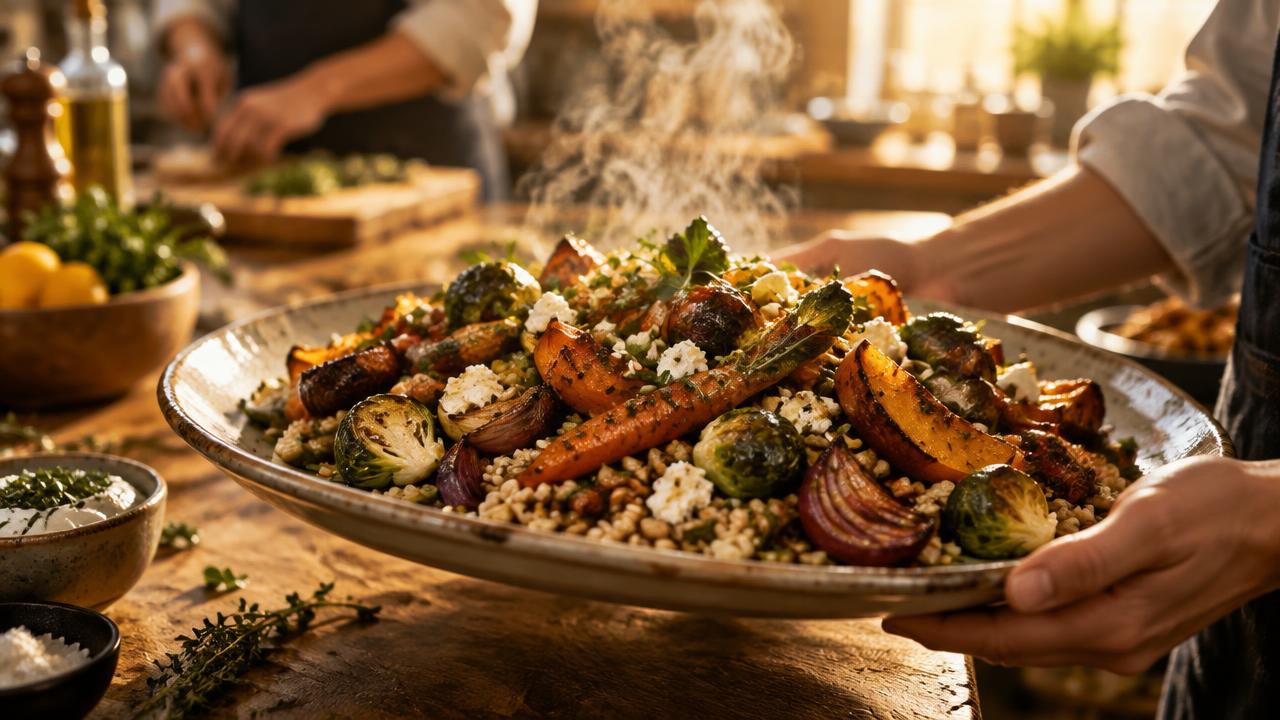
For restaurant brand campaign teams, generate a series of high-fidelity hero shots for food service marketing, capturing a warm, inviting ambiance with precise lighting and environmental context.

Generate photorealistic campaign imagery for food service. This prompt guides AI image models to produce hero, secondary, and detail shots of steaming dishes, focusing on warm ambient light and relevant environmental context, ideal for advertising and menu visuals.

READY-TO-USE PROMPT

Copy Prompt

prompt.txt
As a commercial food photographer and art director, your expertise is in crafting compelling campaign imagery for the food service industry.

**Context:**
We are developing a new visual campaign for a premium restaurant brand. The core objective is to generate a series of high-quality, photorealistic images that convey warmth, freshness, and an inviting dining experience. The focus is on a specific dish, presented as if freshly prepared and ready to be enjoyed, with a strong emphasis on ambient lighting and subtle environmental cues.

**Task:**
Generate a comprehensive set of image generation prompt instructions. This set must cover three distinct shot types: a hero shot, a secondary shot, and a detail shot for the specified dish. Each shot needs precise guidance on camera angle, lens choice, lighting setup, food styling, environmental context, color grading, and a list of negative prompts to ensure consistency and quality. The overall aesthetic should be that of a professionally styled commercial photoshoot.

**Constraints:**
1.  **Lighting:** The dominant light source must be warm, soft, and natural-looking, suggesting either golden hour or elegant indoor ambient light. Avoid harsh shadows or clinical studio lighting.
2.  **Subject:** The `{{dish_name}}` must appear fresh, appealing, and, if appropriate, show signs of warmth (e.g., subtle steam).
3.  **Environment:** The `{{serving_context}}` (e.g., a rustic wooden table, a fine dining setting with linen) should be subtle but clearly establish a high-end restaurant or cafe atmosphere. No distracting elements.
4.  **Realism:** Photorealism is paramount. Avoid any artistic filters, exaggerated stylization, or elements that appear artificial or digitally rendered.
5.  **Consistency:** All three shot types must maintain a consistent visual tone, lighting, and color palette.
6.  **Negative Prompts:** Include a robust list of negative prompts to guide the AI away from undesirable outcomes.

**Output Structure:**
Provide three distinct prompt blocks, each clearly labeled for the shot type, followed by a shared parameters section.

### Hero Shot Prompt:
Description: A primary focus on the `{{dish_name}}`, showcasing its best features with shallow depth of field.
`[Your specific prompt for the hero shot, including camera, lens, angle, lighting, styling, and context details.]`

### Secondary Shot Prompt:
Description: A broader perspective, incorporating more of the `{{serving_context}}` or an element of human interaction (e.g., a hand reaching for a fork, blurred in background) while still featuring the `{{dish_name}}`.
`[Your specific prompt for the secondary shot, including camera, lens, angle, lighting, styling, and context details.]`

### Detail Shot Prompt:
Description: An extreme close-up highlighting texture, garnish, or a key ingredient of the `{{dish_name}}`.
`[Your specific prompt for the detail shot, including camera, lens, angle, lighting, styling, and context details.]`

### Shared Parameters:
`[Include consistent instructions for overall lighting conditions (e.g., "soft diffused backlight, golden hour ambience"), color grading (e.g., "warm cinematic color grading, natural saturation"), aspect ratio, and a comprehensive list of negative prompts (e.g., "blurry, out of focus, artificial light, cold colors, plastic texture, amateur photography, low resolution, messy, dirty").]`

Example for `{{dish_name}}`: 'steaming truffle pasta'
Example for `{{serving_context}}`: 'on a polished dark wood table in a dimly lit, elegant restaurant'

Remember to maintain the perspective of a commercial photographer, providing precise, actionable instructions for an image generation model.

Estimated results

DifficultyAdvanced
Setup time90 min
Time saved2+ hours
Best modelsMidjourney, Flux
Best audienceFood Service, Hospitality

Editor's note

Why this prompt matters

Creating compelling visual campaigns for the food service industry often requires a consistent aesthetic across multiple image types, from broad environmental shots to intimate close-ups. This workflow addresses the challenge of generating a cohesive set of commercial-grade food imagery, specifically focusing on a warm, inviting ambiance with precise lighting and environmental context. It is designed for restaurant brand campaign teams, marketing managers, and art directors who need high-fidelity visual assets for new menu launches, promotional materials, or digital content. The process streamlines the creation of a visual narrative around a hero dish, ensuring that every image contributes to a unified brand message. You'll find this particularly useful when a professional photoshoot is not immediately feasible, or when rapid prototyping of visual concepts is required to align stakeholders on a specific look and feel. The emphasis here is on achieving photorealism and a consistent mood that evokes warmth and quality, crucial for attracting diners.

Anatomy

Prompt engineering breakdown

Role

The AI assumes the persona of a commercial food photographer and art director, establishing a clear expectation for technical and aesthetic precision in the output.

Context

The model is informed that the task is part of a visual campaign for a premium restaurant brand, aiming for images that convey warmth, freshness, and an inviting dining experience, focusing on a specific dish with ambient lighting and environmental cues.

Goal

The primary objective is to generate a comprehensive set of image generation prompt instructions for three distinct shot types: hero, secondary, and detail, each requiring precise guidance on camera, lighting, styling, and negative prompts.

Constraints

Explicit constraints are given for warm, soft, natural lighting, fresh and appealing subject presentation (e.g., steam), subtle high-end environmental context, strict photorealism, and visual consistency across all shots. A robust list of negative prompts is also mandated.

Output format

The required output is structured into three distinct prompt blocks (Hero, Secondary, Detail Shot) followed by a shared parameters section, ensuring all necessary instructions are provided systematically.

Why this structure works

Role priming as a commercial photographer ensures the model adopts a precise, professional tone and focus. Explicit constraints on lighting, subject, and realism guide the AI towards the desired aesthetic and technical quality. The structured output format guarantees comprehensive instructions for each shot type, leading to consistent and usable campaign assets.

Pick your version

Prompt variations

BeginnerWorks with any model

For users new to AI image generation or who need a quick, straightforward output with less technical jargon.

prompt.txt
Imagine you're taking pictures for a fancy restaurant. We need three kinds of photos for a new menu item: a main picture, one showing more of the place, and a close-up. Make sure the pictures look real, warm, and inviting.

**What to include:**
1.  **Main Shot:** Focus mostly on the `{{dish_name}}`. Make it look delicious and fresh.
2.  **Scene Shot:** Show the `{{dish_name}}` on a nice `{{serving_context}}`. Maybe a hand reaching for it, but blurry.
3.  **Close-up Shot:** Get really close to show details of the `{{dish_name}}`, like textures or garnishes.

**Rules:**
*   **Light:** Soft, warm light, like sunlight coming in or cozy restaurant lights. No harsh shadows.
*   **Dish:** Must look fresh and hot (if applicable, like steam).
*   **Background:** Nice but not distracting.
*   **Style:** Very realistic, like a real photo. No cartoon or overly edited looks.
*   **Consistency:** All three photos should look like they belong together.
*   **Things to avoid:** blurry, fake-looking, cold colors, messy, bad quality.

Provide separate instructions for each photo type and a shared list of things to avoid.
ProfessionalBest with midjourney

When a high degree of control and specific technical details are required for commercial-grade output, mirroring a detailed client brief.

prompt.txt
As a seasoned commercial food photographer and art director, your task is to translate a detailed campaign vision into precise image generation prompts.

**Project Context:**
We are crafting a visual narrative for a high-end restaurant brand. The goal is to produce photorealistic images that evoke warmth, culinary excellence, and an inviting atmosphere. The centerpiece is the `{{dish_name}}`, presented fresh, with intentional ambient lighting and subtle environmental integration.

**Assignment:**
Develop a comprehensive prompt set for an AI image generator, encompassing a hero shot, a secondary contextual shot, and a close-up detail shot for the `{{dish_name}}`. For each, specify camera parameters (angle, lens), lighting schema, food styling cues, environmental elements (`{{serving_context}}`), color grading, and a targeted list of negative prompts. The output must reflect a professionally executed commercial food photography session.

**Critical Directives:**
1.  **Illumination:** Employ warm, soft, diffused lighting, consistent with golden hour or refined interior restaurant ambiance. Harsh or artificial lighting is strictly prohibited.
2.  **Subject Integrity:** The `{{dish_name}}` must appear pristine, appetizing, and exhibit appropriate signs of warmth (e.g., delicate steam).
3.  **Setting:** The `{{serving_context}}` should subtly reinforce a premium dining environment without visual clutter.
4.  **Authenticity:** Prioritize absolute photorealism. Eschew any filters, excessive stylization, or digital artifacts.
5.  **Visual Cohesion:** All generated images must maintain a uniform visual tone, consistent lighting, and harmonious color palette.
6.  **Exclusions:** A comprehensive list of negative prompts is essential to prevent undesirable outcomes.

**Output Format:**
Generate three distinct prompt sections for each shot type, followed by a consolidated section for shared global parameters and negative prompts.
Short VersionBest with flux

For quick iterations or when working with models that prefer shorter input, focusing on core elements without extensive detail.

prompt.txt
Generate three photorealistic food campaign images: a hero shot of `{{dish_name}}`, a secondary shot integrating `{{serving_context}}`, and a detail close-up. Maintain warm, soft ambient lighting, showcasing the dish as fresh and appealing. Emphasize photorealism with a consistent visual tone. Avoid harsh light, artificial elements, or cold colors. Provide separate instructions for each shot type, along with shared lighting and negative prompt parameters to ensure a cohesive, high-quality commercial aesthetic.
EnterpriseBest with midjourney

For large organizations with strict brand guidelines, legal reviews, and multiple stakeholders involved in content creation, requiring explicit compliance and risk mitigation language.

prompt.txt
As a commercial content generation specialist, your role is to produce high-fidelity visual assets for a premium restaurant brand's marketing campaign, adhering to strict corporate and brand guidelines.

**Strategic Objective:**
Our aim is to generate a series of photorealistic images of `{{dish_name}}` that communicate warmth, culinary excellence, and an inviting brand experience. These assets must align with established brand aesthetics and be suitable for multi-channel deployment.

**Deliverables:**
Create comprehensive AI image generation instructions for a hero shot, a secondary shot, and a detail shot. Each prompt must include specific directives for camera setup, lighting, food presentation, environmental context (`{{serving_context}}`), color grading, and an exhaustive list of negative prompts. All outputs must reflect commercial-grade photography, ensuring legal compliance and stakeholder approval.

**Mandatory Specifications & Compliance:**
1.  **Brand Compliance:** All visuals must strictly conform to the brand's visual identity guide regarding mood, color palette, and photographic style.
2.  **Lighting Protocol:** Utilize warm, soft, naturalistic lighting (e.g., golden hour, elegant interior ambient). Harsh or unrealistic illumination is a brand deviation risk.
3.  **Product Integrity:** The `{{dish_name}}` must appear fresh, appealing, and accurately represented. Any misrepresentation or artificial enhancement beyond standard commercial styling is prohibited.
4.  **Contextual Accuracy:** The `{{serving_context}}` must subtly reinforce the brand's target upscale dining environment without introducing distracting or off-brand elements.
5.  **Photorealism & Authenticity:** Absolute photorealism is paramount to prevent consumer deception or perception of AI-generated fakery. Avoid stylistic filters or digital artifacts.
6.  **Cross-Platform Consistency:** Ensure visual consistency across all three shot types for cohesive campaign messaging.
7.  **Risk Mitigation:** Implement robust negative prompts to prevent outputs that could be perceived as low-quality, unappetizing, or inconsistent with brand values, thereby mitigating brand reputation risk.

**Output Structure:**
Provide three distinct, clearly labeled prompt blocks for each shot, followed by a shared section for global parameters and a comprehensive negative prompt list, designed for internal review and external deployment.

What you'll get

Expected output

Hero Shot Prompt:

Description: A primary focus on the steaming truffle pasta, showcasing its best features with shallow depth of field. A masterfully styled steaming truffle pasta dish, presented on a polished dark wood table in a dimly lit, elegant restaurant. The camera is a Canon EOS R5 with an 85mm f/1.4 lens, positioned at a low, intimate eye-level angle, slightly above the dish. Soft, diffused golden hour backlight illuminates the steam rising from the pasta, highlighting its texture and the delicate truffle shavings. The background is a beautifully blurred, warm ambiance of the restaurant, showing hints of soft lighting and elegant decor. Focus is critically sharp on the pasta, with a creamy, shallow depth of field. Professional food styling, natural saturation, warm cinematic color grading, photorealistic.

Secondary Shot Prompt:

Description: A broader perspective, incorporating more of the serving context or an element of human interaction (e.g., a hand reaching for a fork, blurred in background) while still featuring the steaming truffle pasta. A medium eye-level shot of a steaming truffle pasta dish, situated on a polished dark wood table within an elegant, dimly lit restaurant setting. Captured with a Sony A7 III and a 50mm f/1.8 lens. The frame includes more of the surrounding environment, such as a folded linen napkin, a subtly blurred wine glass, and the edge of a human hand gently reaching for a fork in the background, adding a sense of interaction. Consistent warm ambient lighting from a hidden softbox on the left, mimicking natural evening light, bathes the scene. The pasta remains the focal point, but the broader context establishes the high-end dining experience. Professional food styling, natural saturation, warm cinematic color grading, photorealistic.

Detail Shot Prompt:

Description: An extreme close-up highlighting texture, garnish, or a key ingredient of the steaming truffle pasta. An extreme close-up of steaming truffle pasta, emphasizing the rich texture of the pasta strands, the delicate shavings of black truffle, and a dusting of Parmesan cheese. Shot with a Nikon Z7 II and a 105mm f/2.8 macro lens, positioned directly overhead. Soft, directional warm fill light from the right accentuates the fine details and the subtle sheen of the sauce. Visible, gentle steam adds to the freshness. The depth of field is exceptionally shallow, rendering the polished dark wood table and any background elements as an abstract, warm blur. Professional food styling, natural saturation, warm cinematic color grading, photorealistic.

Shared Parameters:

Overall lighting conditions: soft diffused backlight, golden hour ambience, warm fill light. Color grading: warm cinematic color grading, natural saturation, rich shadows, balanced highlights. Aspect ratio: 3:2. Negative prompts: blurry, out of focus, artificial light, cold colors, plastic texture, amateur photography, low resolution, messy, dirty, oversaturated, harsh shadows, sterile background, cartoon, illustration, CGI, reflections, bokeh artifacts, distorted perspective, unappetizing, fake food, poorly lit, cluttered, bad composition.
Under the hood

Why this prompt works

This workflow produces superior results over a generic request due to its deliberate application of several prompt engineering techniques. Role priming establishes the AI as a "commercial food photographer and art director," immediately setting an expectation for professional-grade, stylized output rather than a literal interpretation. Explicit constraints on lighting, subject, environment, and realism guide the AI away from common pitfalls like clinical studio lighting or artificial textures, ensuring adherence to a specific brand aesthetic. The demand for photorealism and a consistent visual tone across all shots is a direct instruction for high fidelity and campaign coherence.

The structured output requirement, separating instructions into Hero, Secondary, and Detail shots with shared parameters, is critical. This approach allows for nuanced adjustments for each perspective while maintaining overall consistency in lighting and grading, mimicking how a human photographer would plan a shoot. Finally, the inclusion of a comprehensive list of negative prompts acts as a crucial guardrail, actively steering the AI away from undesirable elements such as blurriness, cold colors, or amateurish composition. These combined techniques move beyond simple description to provide a detailed creative brief, significantly reducing iteration time and generating a more refined, usable set of images.

Model fit

Best AI models for this prompt

Midjourney

Midjourney excels at interpreting descriptive and aesthetic prompts, making it suitable for capturing specific lighting moods and stylistic details like "warm ambient light" and "steaming dish." Its ability to render realistic textures and nuanced atmospheric effects helps create high-fidelity food imagery. However, precise control over minute scene elements can sometimes require multiple iterations. See the full Midjourney hub for deeper guidance.

Flux

Flux is well-suited for this task due to its strength in photorealistic rendering and adherence to complex compositional instructions. It handles detailed lighting conditions and environmental context effectively, which is crucial for achieving the desired commercial photography aesthetic. Users might find Flux particularly responsive to structured prompts that break down scene elements. See the full Flux hub for deeper guidance.

When to use

  • When launching a new menu item and requiring consistent, high-quality visuals across all marketing channels.
  • For creating a unified visual identity for a premium restaurant's advertising campaign.
  • When building a portfolio of dishes for a catering service that emphasizes presentation and warmth.
  • To refresh existing brand imagery with a more inviting, professionally styled aesthetic.
  • For developing social media content that maintains a sophisticated, consistent look and feel.

When not to use

  • If the campaign requires a stark, minimalist, or abstract visual style for the food.
  • For quick, unpolished social media stories or behind-the-scenes content that prioritizes immediacy over polish.
  • When the focus is on fast food or casual dining with bright, high-key, or artificial lighting.
  • If the primary need is for product packaging shots requiring clean, isolated backgrounds without environmental context.
  • For conceptual art where photorealism and commercial styling are not the main objectives.

Get more from it

Pro tips

  • 1

    Specify exact camera angles and focal lengths (e.g., 'low 3/4 angle, 85mm lens') to prevent generic compositions and ensure a professional perspective.

  • 2

    Describe light direction and quality precisely (e.g., 'soft diffused backlight from a large window') to control mood and avoid flat, uninspired illumination.

  • 3

    Detail the serving context with specific props (e.g., 'crisp linen napkin, subtle reflection on polished silverware') to establish a high-end atmosphere.

  • 4

    Use evocative adjectives for food appearance (e.g., 'glistening sauce, caramelized crust, vibrant garnish') to enhance freshness and appetite appeal.

  • 5

    Iteratively refine negative prompts by adding terms for specific unwanted artifacts like 'digital noise, distorted perspective, oversaturated hues' seen in initial outputs.

  • 6

    Experiment with variations of `{{dish_name}}` and `{{serving_context}}` to explore diverse menu items while maintaining the core visual aesthetic and quality.

Don't ship this

Common mistakes

  • Using overly generic descriptions for the dish, resulting in uninspired or bland food imagery.

    Fix — Be highly specific about ingredients, textures, and preparation, for example, 'seared scallops with a golden crust, delicate microgreens'.

  • Providing vague lighting instructions, which leads to inconsistent or unflattering illumination.

    Fix — Define the light source, direction, and color temperature precisely, such as 'soft, warm golden hour light from a side window'.

  • Omitting specific environmental details, causing the dish to appear isolated or unnaturally placed.

    Fix — Include distinct background elements like 'blurred restaurant interior, subtle wine glass reflection on a dark surface'.

  • Relying on a basic set of negative prompts, missing nuances that degrade image quality.

    Fix — Expand negative prompts with specific terms like 'plastic sheen, distorted perspective, oversaturated colors, harsh shadows, dirty dishes'.

  • Inconsistent styling, props, or color grading across the hero, secondary, and detail shots.

    Fix — Ensure all three prompt blocks reinforce the same aesthetic, using identical descriptions for shared elements and color palettes.

People also ask

Frequently asked questions

Q.Can this prompt be adapted for different types of cuisine, beyond the examples provided?

Yes, it is designed for adaptability. Update {{dish_name}} and {{serving_context}} to reflect the specific cuisine's typical presentation, ingredients, and dining environment. For instance, describe a sushi platter on a bamboo mat in a minimalist setting.

Q.What if I need a colder, more modern or industrial aesthetic, rather than warm and inviting?

This prompt is optimized for warmth. To achieve a colder aesthetic, you would need to significantly rewrite the lighting and color grading sections, focusing on cooler tones, harder light, and materials like concrete or steel.

Q.How important are the negative prompts for achieving high-quality food images?

Negative prompts are crucial. They guide the AI away from common pitfalls in food photography like artificial textures, unflattering light, or messy presentations. Refine them based on specific undesirable outcomes you observe.

Q.Can I use this prompt to generate images with multiple dishes in a single shot?

This prompt focuses on a single hero dish for each shot type. To feature multiple dishes, you would need to modify the prompt to specify the composition, placement, and interaction of each item.

Q.Will this prompt work for a more casual cafe or diner setting, not just fine dining?

Absolutely. Adjust {{serving_context}} to 'rustic wooden table, natural light through a cafe window, ceramic mug blurred in background' to match the desired casual, yet warm, vibe.

Version 1.0Last reviewed July 23, 2026
Reviewed by PromptInFlow Editorial Team