Image AIPhotographyAdvanced90 minSaves 2+ hours

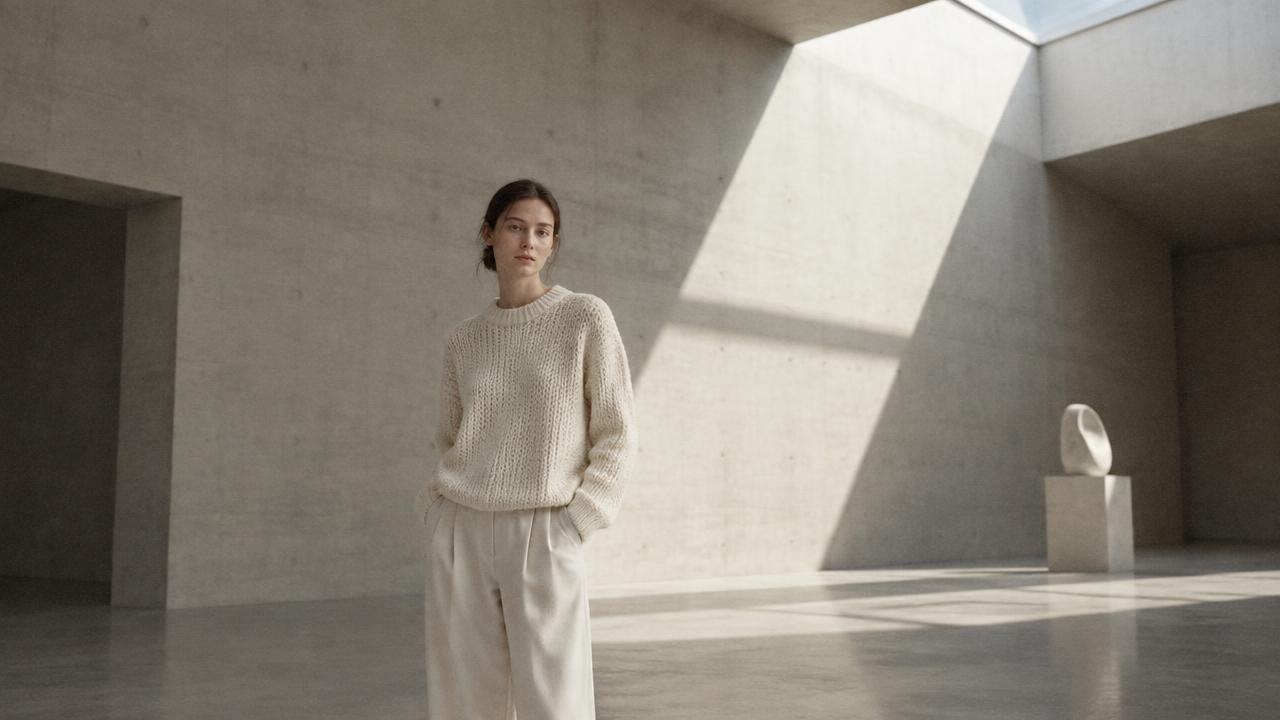
Minimalist Knitwear Editorial: Off-White Palette, Architectural Setting

Creative directors can generate high-fidelity editorial images for minimalist knitwear campaigns, focusing on off-white palettes and architectural backdrops to define brand aesthetic quickly.

Craft detailed image prompts for a minimalist knitwear editorial campaign. Focus on off-white garments, architectural settings, and specific lighting to achieve a sophisticated, fabric-aware aesthetic. This prompt helps creative directors visualize concepts efficiently, ensuring brand consistency.

READY-TO-USE PROMPT

Copy Prompt

prompt.txt
As an image generation specialist for fashion editorials, your task is to construct a precise image prompt. This prompt will guide an AI model to create a visual for a minimalist knitwear brand's new collection. The brand emphasizes clean lines, subtle textures, and a refined, understated aesthetic. The campaign needs to convey sophistication and quality through specific visual cues.

### Role
Image generation specialist for fashion editorials.

### Context
Develop a visual concept for a minimalist knitwear brand's new collection. The brand's identity is built on understated luxury, natural textures, and a serene visual language. The campaign aims to highlight the garment's drape, material quality, and the model's contemplative interaction with a clean, architectural environment.

### Task
Generate a detailed image prompt for an AI image model. The prompt must describe a single editorial image featuring a model wearing minimalist knitwear in an architectural setting. The output should be a single, coherent string ready for direct input into an image generator.

### Constraints
*   **Subject**: One female model, 25-35 years old, natural, understated beauty, diverse ethnicity. Posing should be elegant, contemplative, and highlight the garment's drape and form. The model should not be smiling directly at the camera.
*   **Wardrobe**: Minimalist knitwear, specifically a `{{garment_type}}` (e.g., oversized sweater, fitted cardigan, ribbed dress, knit skirt). Color palette strictly off-white, cream, ecru, or very light beige. Emphasize texture, subtle ribbing, and the natural drape of the fabric. The garment should appear high-quality and tactile.
*   **Setting**: Clean, modern architectural interior or exterior. Think concrete, smooth stone, large windows, minimalist lines, and stark geometric forms. Avoid clutter or distracting elements. Examples: Brutalist building interior, minimalist gallery space, a stark modern staircase, a concrete wall with subtle texture. Specify `{{architectural_style}}` (e.g., Brutalist, Bauhaus, Minimalist Japanese).
*   **Lighting**: Soft, diffused natural light. High-key, slightly overexposed feel. Emphasize shadows that define form and texture, not harsh contrasts. The light should feel ethereal and clean, enhancing the off-white palette.
*   **Camera**: Medium shot or full body shot. Lens: 85mm or 100mm. Aperture: f/2.8-f/4. Shallow depth of field to subtly blur the background, keeping focus on the model and garment.
*   **Styling Cues**: Minimal makeup, natural hair (pulled back or loosely styled). No accessories or very subtle, unbranded ones (e.g., a thin gold band). Focus on the garment and the model's interaction with the space.
*   **Art Direction**: Evoke a sense of calm, introspection, and understated luxury. The overall mood should be serene and sophisticated.
*   **Negative Prompts**: Avoid busy backgrounds, bright colors, excessive jewelry, heavy makeup, smiling, dynamic action poses, low-quality fabric textures, blurry faces, distorted limbs, multiple models, visible brand logos, cluttered environments, harsh shadows.

### Output
Provide the complete image prompt string.

Estimated results

DifficultyAdvanced
Setup time90 min
Time saved2+ hours
Best modelsMidjourney, Flux
Best audienceFashion, Apparel

Editor's note

Why this prompt matters

Fashion brands often face the challenge of consistently producing high-quality visual content that aligns with their specific aesthetic, especially when working with nuanced styles like minimalism. Traditional photoshoots are resource-intensive, making rapid iteration and exploration of campaign concepts difficult. This workflow offers a structured method for creative directors and marketing professionals in the fashion industry to generate precise editorial imagery. It's particularly valuable for brands that rely on a distinct visual language, such as those specializing in minimalist knitwear with a refined, understated appeal. The process streamlines the initial conceptualization phase, allowing teams to quickly visualize campaign ideas, develop mood boards, and test different visual directions without the significant investment required for a physical shoot. Reach for this workflow when you need to articulate a clear visual brief and receive an image prompt that directly translates into a specific, high-fidelity aesthetic.

Anatomy

Prompt engineering breakdown

Role

Image generation specialist for fashion editorials.

Context

Develop a visual concept for a minimalist knitwear brand's new collection. The brand's identity is built on understated luxury, natural textures, and a serene visual language. The campaign aims to highlight the garment's drape, material quality, and the model's contemplative interaction with a clean, architectural environment.

Goal

Generate a detailed image prompt for an AI image model. The prompt must describe a single editorial image featuring a model wearing minimalist knitwear in an architectural setting. The output should be a single, coherent string ready for direct input into an image generator.

Constraints

Subject: One female model, 25-35, natural beauty, diverse ethnicity, contemplative pose, no direct smiling. Wardrobe: Minimalist knitwear (specific garment type), off-white/cream/ecru/light beige palette, emphasize texture and drape. Setting: Clean, modern architectural interior/exterior (Brutalist, Bauhaus, Minimalist Japanese), no clutter. Lighting: Soft, diffused natural light, high-key, subtle shadows. Camera: Medium or full body shot, 85mm/100mm lens, f/2.8-f/4, shallow depth of field. Styling: Minimal makeup, natural hair, no accessories. Art Direction: Calm, introspection, understated luxury. Negative Prompts: Avoid busy backgrounds, bright colors, excessive jewelry, heavy makeup, smiling, dynamic action poses, low-quality fabric, blurry faces, distorted limbs, multiple models, visible brand logos, cluttered environments, harsh shadows.

Output format

Provide the complete image prompt string, ready for direct input into an image generator.

Why this structure works

The prompt's effectiveness stems from its explicit constraints, which detail every visual element from model pose to lighting. Role priming the AI as an 'image generation specialist' focuses its output on editorial quality. Finally, the structured output ensures the generated text is a direct, usable image prompt for consistent results.

Pick your version

Prompt variations

BeginnerWorks with any model

For quick tests or when less specific control is needed for initial concept exploration.

prompt.txt
Generate an editorial image for a minimalist knitwear brand. The image should feature one female model, 25-35 years old, with natural beauty, wearing a `{{garment_type}}` in an off-white, cream, or light beige color. Emphasize the garment's texture and drape. The setting should be a clean, modern `{{architectural_style}}` interior or exterior, such as a concrete wall or minimalist gallery. Use soft, diffused natural light, aiming for a high-key feel. Capture a medium or full body shot. The model should have a contemplative pose, not smiling. Avoid busy backgrounds, bright colors, heavy makeup, and cluttered environments. The final output is a ready-to-use image prompt string.
ProfessionalBest with midjourney

When detailed control and high-fidelity output are required for a brand campaign, mirroring the depth of the primary prompt.

prompt.txt
Craft a precise image prompt for an AI model, targeting a minimalist knitwear editorial. The visual requires a single female model, 25-35 years old, of diverse ethnicity, exuding understated beauty. She should wear a `{{garment_type}}`—e.g., a ribbed dress or oversized sweater—in an off-white, ecru, or very light beige palette, highlighting its tactile quality and natural drape. The backdrop must be a clean, modern `{{architectural_style}}` environment like a Brutalist interior or a stark concrete structure, free of distractions. Employ soft, diffused natural light, achieving a high-key, slightly overexposed aesthetic with subtle form-defining shadows. Use an 85mm or 100mm lens, f/2.8-f/4, for a shallow depth of field. Styling should include minimal makeup and natural hair. The model's pose should be contemplative, never smiling. Exclude busy backgrounds, vibrant colors, excessive accessories, and low-quality textures from the prompt.
Short VersionBest with flux

For rapid prototyping or when character limits are a primary concern, needing a concise yet effective prompt.

prompt.txt
Create a concise image prompt for a minimalist knitwear editorial. Feature one female model, 25-35, in a `{{garment_type}}` (off-white/cream) within a stark `{{architectural_style}}` setting. Focus on natural textures and drape. Use soft, diffused natural light, medium shot (85mm/100mm, f/2.8-f/4) with shallow depth of field. Model should be contemplative, no smile. Avoid busy backgrounds, bright colors, heavy makeup, and clutter. The output must be a single, direct image prompt string for AI generation.
EnterpriseBest with midjourney

For large-scale campaigns with multiple stakeholders, requiring strict adherence to brand guidelines and legal review processes.

prompt.txt
As a lead creative director, generate an AI image prompt for a minimalist knitwear editorial campaign, ensuring compliance with brand guidelines and legal review. The prompt must depict a single female model, 25-35, representing global diversity, in a `{{garment_type}}` (off-white/ecru) that exemplifies understated luxury and fabric integrity. The setting should be a distinctly `{{architectural_style}}` space, approved for brand association, devoid of distracting elements or potential intellectual property conflicts. Lighting requires soft, diffused natural illumination to achieve a high-key, sophisticated mood, aligning with brand aesthetic standards. Specify camera settings (e.g., 85mm, f/2.8) for precise visual control. Include explicit negative prompts to mitigate risks of misrepresentation, such as 'no visible logos,' 'no cultural appropriation,' 'no inappropriate poses.' The final output must be a consolidated image prompt string, ready for stakeholder review and legal approval.

What you'll get

Expected output

One female model, 28 years old, natural beauty, East Asian ethnicity. Posing elegantly, with a contemplative gaze, highlighting the drape and form of the garment. She is not smiling directly at the camera. Wearing minimalist knitwear, specifically an oversized sweater in an off-white hue. The knit features subtle ribbing, emphasizing its tactile quality and natural drape. The garment appears high-quality. The setting is a clean, modern architectural interior, Brutalist style, featuring smooth concrete walls and a large, unadorned window. Soft, diffused natural light illuminates the scene, creating a high-key, slightly overexposed feel. Shadows are gentle, defining form and texture without harsh contrasts, enhancing the serene, clean aesthetic. Medium shot, captured with an 85mm lens at f/3.2, resulting in a shallow depth of field that subtly blurs the background while keeping sharp focus on the model and her knitwear. Minimal makeup, with natural hair pulled back simply. No accessories. The art direction conveys calm, introspection, and understated luxury, establishing a serene and sophisticated mood. --neg busy backgrounds, bright colors, excessive jewelry, heavy makeup, smiling, dynamic action poses, low-quality fabric textures, blurry faces, distorted limbs, multiple models, visible brand logos, cluttered environments, harsh shadows

Under the hood

Why this prompt works

This workflow produces effective results due to its adherence to several key prompt-engineering techniques. Role priming, by designating the AI as an "image generation specialist for fashion editorials," directs the model to adopt a professional perspective, focusing on industry standards for aesthetics and presentation. The explicit constraints section is critical; it breaks down a complex creative brief into manageable, detailed parameters for subject, wardrobe, setting, lighting, camera, and styling. This granular specification minimizes ambiguity and ensures the generated output aligns precisely with the desired minimalist and architectural theme. Furthermore, the inclusion of detailed negative prompts (--neg) is crucial for refinement, actively guiding the AI to omit elements that would detract from the brand's understated luxury aesthetic. Finally, the demand for a structured output in the form of a single, coherent string ensures that the generated prompt is immediately usable by image models, translating a multi-faceted artistic vision into a direct, executable command rather than a descriptive analysis.

Model fit

Best AI models for this prompt

Midjourney

Midjourney excels at aesthetic coherence and artistic interpretation, making it suitable for fashion editorials. It handles specific lighting and textural details, especially fabric drape and subtle material qualities, very well. Users may need to iterate on negative prompts to prevent over-stylization of faces or unintended artistic flourishes. See the full Midjourney hub for deeper guidance.

Flux

Flux is effective for generating clean, architectural backgrounds and maintaining a consistent minimalist aesthetic. It handles specific color palettes and geometric forms with precision, which is crucial for this prompt's setting. Achieving precise fabric drape and subtle textural nuances might require more specific prompting compared to Midjourney. See the full Flux hub for deeper guidance.

When to use

  • For launching a new knitwear collection that emphasizes texture and subtle design.
  • When creating a lookbook or campaign imagery for a minimalist fashion brand.
  • To generate visuals for social media or website content requiring a sophisticated, understated aesthetic.
  • When seeking consistent imagery that highlights garment drape and quality in a clean environment.
  • For editorial features focusing on quiet luxury or architectural fashion.
  • To establish a refined brand identity through visual consistency.

When not to use

  • For brands with vibrant color palettes or maximalist design principles.
  • When the campaign requires dynamic action shots or models in highly expressive poses.
  • If the desired aesthetic involves cluttered, urban, or natural outdoor settings.
  • For products like activewear or swimwear that demand different environmental contexts.
  • When the focus is on street style or candid photography.

Get more from it

Pro tips

  • 1

    Specify fabric composition (e.g., 'cashmere knit', 'merino wool') to guide the AI towards realistic texture and drape.

  • 2

    Experiment with slight variations in camera angle and focal length to achieve diverse compositions while maintaining the core aesthetic.

  • 3

    Reinforce 'no direct smile' and 'contemplative expression' in your prompt iterations to prevent generic model expressions.

  • 4

    Add specific architectural elements like 'fluted concrete column' or 'raw plaster wall' for more precise environment control.

  • 5

    Iterate on lighting descriptions, such as 'morning light through large window' or 'soft overhead diffused light', to refine mood.

  • 6

    If the model's ethnicity isn't precise, add specific descriptors like 'East Asian model' or 'Afro-Caribbean model' for better control.

Don't ship this

Common mistakes

  • The model appears smiling directly at the camera, breaking the contemplative mood.

    Fix — Reiterate 'no smile', 'neutral expression', or 'contemplative gaze' in the negative prompts and positive prompt description.

  • The knitwear color deviates from the off-white palette, introducing unwanted hues.

    Fix — Strictly list acceptable colors (e.g., 'cream, ecru, ivory, light beige') and add 'no vibrant colors' to negatives.

  • The architectural setting becomes too busy or includes distracting elements.

    Fix — Emphasize 'minimalist lines', 'clean surfaces', and 'no clutter' in the setting description and negative prompts.

  • Fabric texture looks generic or low-quality, failing to convey luxury.

    Fix — Use descriptive terms like 'finely ribbed', 'thick gauge knit', 'soft drape', or 'tactile texture' in the wardrobe section.

  • Lighting appears harsh or flat, losing the intended soft, high-key effect.

    Fix — Explicitly request 'soft, diffused natural light', 'gentle shadows', and 'high-key lighting' in your prompt.

  • The model's pose is generic or doesn't highlight the garment's form.

    Fix — Add specific pose cues like 'hand gently touching fabric', 'subtle lean against wall', or 'seated, highlighting drape'.

People also ask

Frequently asked questions

Q.Can I adapt this prompt for other minimalist clothing items besides knitwear?

Yes, you can. Simply replace {{garment_type}} with items like 'tailored linen suit', 'silk slip dress', or 'structured cotton shirt'. Maintain the off-white palette and minimalist styling for consistency.

Q.How do I ensure the architectural style truly reflects my brand's specific aesthetic?

Be highly specific in {{architectural_style}}. Instead of just 'Minimalist Japanese', try 'Tadao Ando-inspired concrete forms' or 'Bauhaus-era interior with large geometric windows' for stronger direction.

Q.What if I need multiple images for a campaign, ensuring the same model and setting?

For consistent models, use seed values or reference images if your AI model supports them. For settings, keep the architectural description very consistent across prompts and use the same seed where possible.

Q.Will this prompt work if my brand uses a slightly different color palette, like muted earth tones?

You can adjust the color palette. Replace 'off-white, cream, ecru' with your specific muted earth tones (e.g., 'terracotta, sage green, sand'). Ensure all other elements, like lighting, still complement the new palette.

Q.How can I prevent the AI from generating overly generic or 'stock photo' looking models?

Focus on specific, subtle descriptors for the model's expression and pose. Add terms like 'pensive', 'serene', or 'quiet confidence'. Specifying 'natural beauty' helps avoid overly stylized features.

Q.Is it possible to subtly introduce a second model without disrupting the minimalist focus?

This prompt is designed for a single model. Introducing a second model risks breaking the minimalist focus and increasing complexity. If necessary, ensure 'two models, subtle interaction' and maintain all other minimalist constraints.

Version 1.0Last reviewed July 20, 2026
Reviewed by PromptInFlow Editorial Team