Image AIPhotographyIntermediate60 minSaves 1 hour

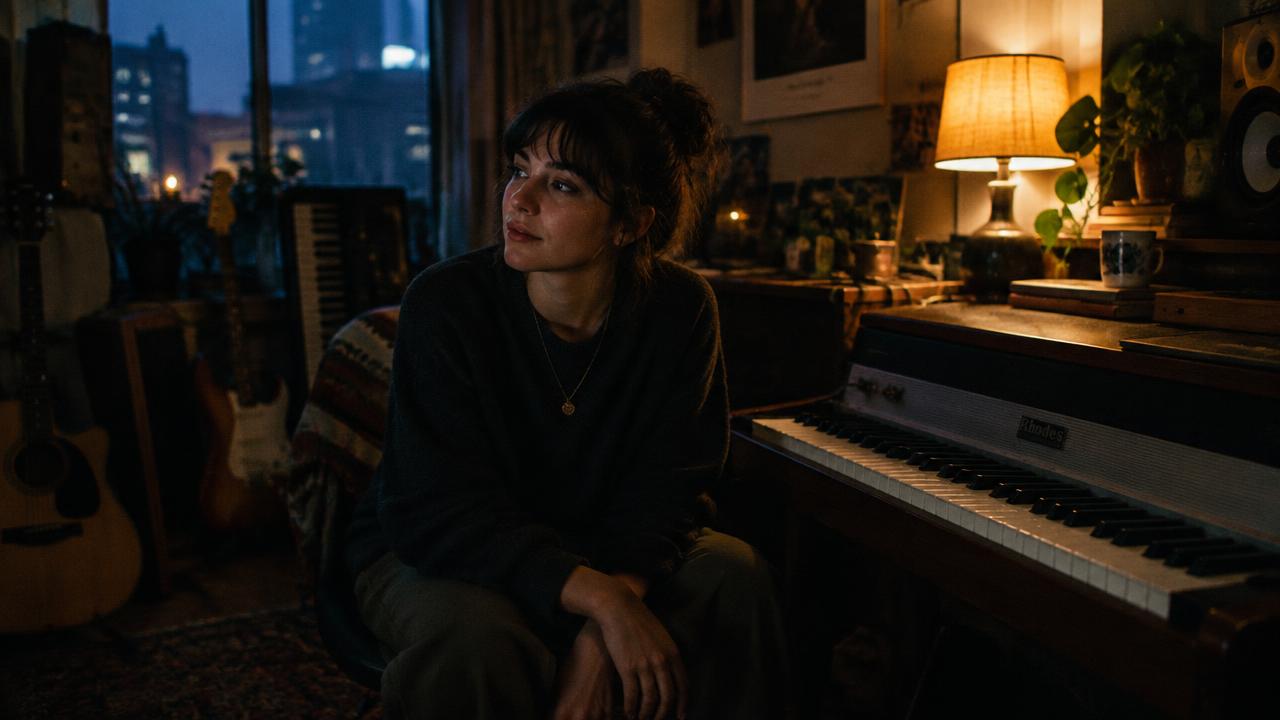
Environmental Musician Portrait: Studio Ambiance, Low Light

For music editorial photographers, generate evocative environmental portraits of musicians in their home studios, capturing authentic presence for features or album art.

Craft detailed AI image prompts for environmental musician portraits. Focus on low-light studio settings, emphasizing the artist's connection to their instrument and creative space. Ideal for editorial features and album artwork, ensuring a mood-rich, authentic visual narrative.

READY-TO-USE PROMPT

Copy Prompt

prompt.txt
Role: As an expert in visual storytelling and image generation for editorial content, your role is to translate a detailed creative brief into a precise, actionable image generation prompt.

Context: We are producing an environmental portrait for a music editorial feature. The goal is to capture a musician in their personal home studio, conveying authenticity and a connection to their creative space. The aesthetic should be low-light, intimate, and atmospheric, with their primary instrument visible and subtly out of focus in the foreground, creating depth and a sense of their craft.

Task: Construct a comprehensive image generation prompt that includes specific directives for the subject, wardrobe, setting, lighting, camera, lens, grade, and negative prompts. The final output must be a single, coherent string ready for an image generation model.

Constraints:
*   **Subject**: A {{musician_name_or_type}}, aged 25-45, engaged in a contemplative or focused activity related to music (e.g., listening, composing, or a brief pause). The expression should be natural, reflecting their artistic temperament.
*   **Wardrobe**: Authentic, understated, and comfortable attire that reflects a working artist's personal style, avoiding overtly branded or distracting elements. Colors should be muted and complementary to the low-light environment.
*   **Setting**: A home studio environment. Include subtle details that suggest the musician's personality or genre, such as analog gear, sheet music, soundproofing, or personal decor. The {{studio_details}} should be subtly integrated.
*   **Lighting**: Predominantly low-key lighting. Use practical lights within the scene (e.g., desk lamp, monitor glow, string lights) as primary light sources. Soft, warm tones are preferred. Ensure deep shadows and high contrast, but maintain detail in the musician's face.
*   **Camera**: Medium format digital camera, handheld perspective.
*   **Lens**: Prime lens, 50mm to 85mm equivalent, with a wide aperture for shallow depth of field.
*   **Grade**: Cinematic, moody, with a slight desaturation and warm color cast. Emphasize textural detail.
*   **Negatives**: Avoid "overly bright", "studio flash", "clean background", "unnatural pose", "digital noise", "harsh shadows", "blurry face", "anamorphic lens flare".

Output:
Provide the full image generation prompt as a single text string.

Example structure for output:
"photographic portrait of {{musician_name_or_type}}, 30s, contemplative, in a dimly lit home studio, surrounded by {{studio_details}}. Wearing understated, comfortable clothing. Warm, soft light from a desk lamp, {{instrument_type}} in soft foreground bokeh, medium format, 85mm, cinematic grade, muted colors --negatives overly bright, studio flash, unnatural pose"

Estimated results

DifficultyIntermediate
Setup time60 min
Time saved1 hour
Best modelsMidjourney, Flux
Best audienceMusic, Photography

Editor's note

Why this prompt matters

Capturing the authentic spirit of a musician often means showing them in their creative environment. This workflow addresses the challenge faced by music editorial photographers and art directors who need to visualize specific, atmospheric portraits for features, album art, or promotional materials. Traditional photoshoots require significant logistical planning and cost, making iterative visual exploration difficult.

This system allows for the rapid generation of highly specific image prompts that define not just the subject, but also the crucial photographic elements like lighting, lens, and grade. It is designed for those who understand the nuances of a creative brief and need to translate that vision into a tangible image concept without the overhead of a full production. Reach for this workflow when you need to quickly iterate on visual ideas, pitch a mood board, or pre-visualize a shoot's aesthetic before committing time and resources to a physical production.

Anatomy

Prompt engineering breakdown

Role

As an expert in visual storytelling and image generation for editorial content, your role is to translate a detailed creative brief into a precise, actionable image generation prompt.

Context

We are producing an environmental portrait for a music editorial feature. The goal is to capture a musician in their personal home studio, conveying authenticity and a connection to their creative space. The aesthetic should be low-light, intimate, and atmospheric, with their primary instrument visible and subtly out of focus in the foreground, creating depth and a sense of their craft.

Goal

Construct a comprehensive image generation prompt that includes specific directives for the subject, wardrobe, setting, lighting, camera, lens, grade, and negative prompts. The final output must be a single, coherent string ready for an image generation model.

Constraints

Detailed specifications for subject (age, activity, expression), wardrobe (authentic, muted), setting (home studio, specific details), lighting (low-key, practical, warm, high contrast), camera (medium format, handheld), lens (prime, 50-85mm, wide aperture), grade (cinematic, moody, desaturated), and a list of specific negative prompts.

Output format

A single, coherent text string formatted as an image generation prompt, following a specific example structure.

Why this structure works

Role priming establishes the AI's persona as an expert, ensuring precise output aligned with editorial standards. Explicit constraints guide the AI on specific artistic and technical requirements, preventing misinterpretations of the desired aesthetic. The structured output format guarantees the generated prompt is directly usable by image models without further editing, streamlining the workflow.

Pick your version

Prompt variations

BeginnerWorks with any model

For users new to image prompting or those needing a quick, basic starting point without much technical detail. Focuses on simple descriptions and core elements.

prompt.txt
Create a picture prompt for a musician in their studio. Focus on a natural, low-light setting.

Subject: A {{type_of_musician}}, looking thoughtful, around 30 years old.
Clothes: Simple, comfortable attire.
Place: A home music studio, with some {{studio_item}} visible, like a microphone or keyboard.
Light: Dim, warm light from lamps or a monitor.
Camera: Close-up shot, with a soft background blur to highlight the musician.
Style: Moody, slightly dark photo with an intimate feel.
Avoid: Too bright, fake smiles, overly clean background.

Output: A single prompt string.

Example: 'photo of a thoughtful {{type_of_musician}}, 30s, in a dim home studio with {{studio_item}}, warm lamp light, soft background, moody colors --negatives bright light, fake smile'
ProfessionalBest with midjourney

When detailed control over aesthetic and technical parameters is required, mirroring the original prompt's precision for experienced users and specific artistic visions.

prompt.txt
Function as a specialist in generating complex image prompts for editorial photography. Your task is to craft a prompt for an environmental portrait of a musician, emphasizing intimacy and artistic depth.

The subject should be a {{musician_archetype}}, aged 28-40, captured in a moment of reflection or creative pause within their private studio space.
Wardrobe: Authentic, subtly textured, dark or neutral tones, avoiding distracting patterns.
Setting: An intimate home studio, featuring vintage synths, microphones, soundproofing panels, and {{unique_studio_elements}}.
Lighting: Dramatic low-key, with primary illumination from a single practical light source like a vintage desk lamp, casting deep shadows and strong highlights. Soft, warm color temperature.
Camera: Fuji GFX 100S, handheld perspective, with a shallow depth of field.
Lens: 80mm prime lens, f/1.8.
Grade: Rich, filmic aesthetic, cool shadows, warm mid-tones, subtle grain.
Negatives: 'overexposed', 'flash photography', 'distracting clutter', 'posed smile', 'digital artifacts', 'anamorphic flare'.

Output: A single string prompt.

Example: 'environmental portrait of a {{musician_archetype}}, 30s, contemplating in a low-lit home studio with {{unique_studio_elements}}, wearing muted attire. Dramatic light from a desk lamp, instrument in soft bokeh. Fuji GFX 100S, 80mm f/1.8, filmic grade --negatives overexposed, flash photography'
Short VersionBest with flux

For rapid iteration or when a concise, direct prompt is preferred without extensive setup. Ideal for quick aesthetic tests or when brevity is key.

prompt.txt
Generate a brief image prompt for a low-light musician portrait in their home studio. Focus on authenticity and mood. Subject: {{musician_type}}, thoughtful, mid-30s. Wardrobe: Simple, dark. Setting: Home studio, {{key_detail}} like a vintage mixer. Lighting: Warm, dim practical lights, deep shadows. Camera: Medium format, shallow depth of field, instrument subtly blurred foreground. Grade: Moody, desaturated, cinematic. Avoid: harsh light, staged poses, clean backgrounds. Output a single prompt string. Example: 'Portrait of a {{musician_type}}, mid-30s, contemplative in a dimly lit home studio with {{key_detail}}. Warm practical light, instrument blurred foreground. Medium format, moody grade --negatives harsh light, staged pose'
EnterpriseBest with midjourney

For large organizations where brand guidelines, legal review, and stakeholder feedback are integral to the creative process, requiring explicit compliance and review steps.

prompt.txt
As a senior creative director overseeing brand image consistency, develop an image generation prompt for an editorial piece, ensuring all outputs align with our visual brand guidelines and undergo pre-release review. Objective: Capture a {{musician_demographic}} in their authentic home studio, emphasizing creative process and subtle brand alignment. The image must pass a brand suitability check for {{target_region}} and adhere to {{legal_compliance_standards}}.

Subject: A {{musician_name}}, 30-40, performing a natural, contemplative action, reflecting artistic integrity.
Wardrobe: Curated, non-logo, {{brand_approved_colors}}.
Setting: Professional home studio, {{specific_brand_elements}} present without being overt.
Lighting: Controlled low-key, primary light from {{approved_light_source}}, soft shadows, minimal spill.
Camera: High-resolution digital medium format, tripod-stabilized, for maximum detail.
Lens: Fixed focal length, 75mm equivalent, f/2.0, ensuring controlled depth.
Grade: Brand-compliant muted tones, enhanced texture, approved color profile {{color_profile_ID}}.
Negatives: 'overt branding', 'poor lighting consistency', 'generic studio', 'legal non-compliance', 'stock photo aesthetic', 'unapproved color palette'.

Final output requires approval from the legal and brand teams before public use. Output: Single prompt string.

Example: 'editorial portrait of {{musician_name}}, 30s, focused in a compliant home studio with {{specific_brand_elements}}. Wearing {{brand_approved_colors}}. Controlled low-key light from {{approved_light_source}}. Medium format, 75mm f/2.0, brand-compliant grade --negatives overt branding, legal non-compliance'

What you'll get

Expected output

Environmental portrait of a {{musician_name_or_type}}, male, 35 years old, with a short beard, deep in thought, listening intently to playback through headphones, eyes slightly closed, a natural, introspective expression. Wearing a dark grey, slightly worn long-sleeve t-shirt and loose-fitting black jeans, authentic and understated, no visible branding. Shot in their personal home studio, a dimly lit, cozy space. In the immediate foreground, slightly out of focus, sits an old, well-used acoustic guitar on a stand, its worn wood grain visible. The background features a vintage analog synthesizer with glowing vacuum tubes, a stack of vinyl records, and handwritten sheet music scattered on a wooden desk. A sound-dampening panel with a subtle fabric texture is visible on the wall. {{studio_details}} like a half-empty coffee mug and a small, framed photo of a landscape are subtly integrated. Lighting is predominantly low-key and intimate, sourced from a warm-toned desk lamp illuminating the musician's face from the side, a soft glow from a computer monitor reflecting in their glasses, and a string of warm fairy lights draped over a bookshelf in the deep background. This creates deep, rich shadows and high contrast, yet carefully preserves detail in the musician's facial features. Captured with a medium format digital camera, handheld perspective, using a prime 85mm lens equivalent at a wide aperture (f/1.8) for an extremely shallow depth of field, rendering the background softly blurred. The grade is cinematic and moody, with a subtle desaturation, emphasizing a warm color cast throughout the scene, and enhancing textural details in the clothing, instruments, and studio environment. Negative prompts: overly bright, studio flash, clean background, unnatural pose, digital noise, harsh shadows, blurry face, anamorphic lens flare.

Under the hood

Why this prompt works

This workflow produces consistent and high-quality results by employing several targeted prompt engineering techniques. First, role priming establishes the AI as an expert in visual storytelling, setting a high bar for the output's precision and aesthetic understanding. The detailed context setting then clarifies the editorial goal, ensuring the AI understands the desired mood and authenticity.

The core strength lies in the explicit constraints for each photographic element: subject, wardrobe, setting, lighting, camera, lens, and grade. This structured approach mirrors a professional creative brief, guiding the AI to specific aesthetic choices rather than broad interpretations. For instance, specifying "low-key lighting" with "practical lights" and "deep shadows" directly translates into the desired moody atmosphere. The inclusion of negative prompts is crucial for refinement, actively filtering out undesirable elements that might otherwise appear. Finally, the request for a structured output as a single, coherent string ensures the generated prompt is immediately usable, saving time and reducing the need for manual editing.

Model fit

Best AI models for this prompt

Midjourney

Midjourney excels at artistic interpretations and maintaining a strong aesthetic vision, making it suitable for editorial photography. Its strength lies in generating highly stylized, moody images that align well with the low-light, cinematic brief. While it can sometimes lean towards more illustrative styles, careful prompting with photographic terms helps guide it. See the full Midjourney hub for deeper guidance.

Flux

Flux offers strong capabilities for realistic photographic rendering, particularly with fine detail and nuanced lighting. It handles complex scene descriptions effectively, which is beneficial for the specific studio environment and instrument focus. Its ability to manage subtle depth of field and color grading makes it a good choice for achieving the desired atmospheric quality. See the full Flux hub for deeper guidance.

When to use

  • When creating editorial content requiring authentic, intimate musician portraits.
  • For album art or promotional materials emphasizing an artist's personal creative space.
  • To generate atmospheric social media content showcasing an artist's process.
  • When building a photography portfolio focused on music and environmental portraiture.
  • For visual narratives demanding a contemplative, low-light aesthetic.

When not to use

  • For high-key, brightly lit commercial photography.
  • When the primary focus is on an instrument product shot requiring sharp detail.
  • For action shots or live performance photography.
  • When a clean, minimalist studio background is preferred over an environmental setting.
  • For group portraits or band photography where multiple subjects need equal focus.

Get more from it

Pro tips

  • 1

    Vary `musician_name_or_type` with specific genres or archetypes to prevent generic subject generation and refine the artist's persona.

  • 2

    Refine `studio_details` to 2-3 distinct elements; too many details can clutter the scene and distract from the subject.

  • 3

    Specify practical light sources precisely (e.g., 'single desk lamp,' 'monitor glow') to ensure dynamic, not flat, low-light conditions.

  • 4

    Be explicit with the `instrument_type` and its placement (e.g., 'acoustic guitar in foreground, soft focus') to guide bokeh accuracy.

  • 5

    Experiment with `grade` modifiers like 'gritty,' 'ethereal,' or 'cinematic noir' to achieve the exact emotional tone required.

  • 6

    Adjust the implied camera distance in the prompt (e.g., 'tight portrait,' 'wider environmental shot') for varied subject-environment balance.

  • 7

    Include specific camera brands (e.g., 'Fujifilm GFX,' 'Hasselblad') to influence the sensor look and overall image character.

Don't ship this

Common mistakes

  • Providing `studio_details` that are too vague or overly extensive.

    Fix — Focus on 2-3 evocative, specific details that define the space without overwhelming the composition, like 'vintage synthesizers, scattered sheet music'.

  • Using a generic `musician_name_or_type` resulting in uninspired subject portrayals.

    Fix — Specify a genre or descriptive archetype, such as 'indie singer-songwriter,' 'electronic music producer,' or 'jazz trumpeter'.

  • Lighting descriptions that lack specific light sources, leading to flat low-light.

    Fix — Explicitly name practical lights like 'single LED strip,' 'glowing monitor,' or 'dim table lamp' for directed illumination.

  • The foreground instrument appearing too sharp or dominating the frame.

    Fix — Reiterate 'soft foreground bokeh' and specify 'subtly out of focus' to maintain the intended depth and focus on the musician.

  • Wardrobe descriptions that are too broad, leading to inappropriate attire.

    Fix — Use descriptive terms like 'oversized knit sweater,' 'worn denim shirt,' or 'vintage band tee' to guide style and mood.

  • Negatives list not comprehensive enough, allowing undesired elements to appear.

    Fix — Review initial outputs for recurring unwanted details and add specific negative terms like 'bright white walls,' 'excessive clutter,' or 'harsh shadows on face'.

People also ask

Frequently asked questions

Q.Can I adapt this prompt for non-musician artists like painters or writers?

Yes, you can. Modify musician_name_or_type to reflect the artist's profession (e.g., 'painter,' 'novelist') and adjust studio_details to suit their creative space. The core aesthetic of an intimate, low-light environmental portrait remains effective.

Q.What if I need a different lens or camera type than specified?

The prompt's camera and lens choices (medium format, 50-85mm prime) are crucial for the shallow depth of field and detail. While you can change them, expect variations in bokeh, sharpness, and overall photographic feel.

Q.How much detail should I include in the `studio_details` variable?

Aim for 2-3 concise, descriptive phrases. For example, 'vintage analog synthesizers, scattered sheet music, acoustic foam panels' provides enough information without making the prompt overly verbose or diluting its focus.

Q.Is it possible to use brighter lighting while maintaining the prompt's mood?

This prompt is specifically designed for a low-key, moody atmosphere. Introducing significantly brighter light sources would contradict the core aesthetic. You would need to extensively re-engineer the lighting directives and negative prompts.

Q.The instrument isn't appearing correctly or is out of place. How can I fix this?

Ensure your instrument_type is specific (e.g., 'vintage electric guitar,' 'upright piano'). If issues persist, explicitly describe its placement and state, like 'antique cello resting against foreground wall, softly blurred'.

Q.Will this prompt accurately generate images of famous musicians?

While you can input names, the model's ability to render specific celebrity likenesses varies. Focus on capturing the stylistic essence and environment of a musician in their studio rather than a precise facial match for more consistent results.

Q.How can I emphasize a more contemplative or pensive mood for the musician?

Reinforce this in the subject description with words like 'pensive gaze,' 'lost in thought,' or 'deeply absorbed.' The specified cinematic grade and emphasis on deep shadows also significantly contribute to this atmosphere.

Version 1.0Last reviewed July 23, 2026
Reviewed by PromptInFlow Editorial Team